Showing posts with label frugal living. Show all posts

Friday, October 24, 2014

5 reasons why people don't grow vegetables

Having just returned from the UK on a lovely visit with my sister and her family we returned to find our garden into the full swing of spring.

One of the gardens yesterday
The tiny seedlings that were planted before I left are knee high, spinach has bolted, potatoes are ready to be dug out, tomatoes putting out their first flowers and cucumbers climbing up their trellis.

What a joy to know that from now on we will be eating daily from the garden. There is a huge amount of satisfaction in walking through the garden and seeing food for today, some for tomorrow and others for later in the month growing there.

It is pesticide and fertiliser free attested to the fact that bees and butterflies are visiting, snails and slugs hide under the lettuces and caterpillars munch away at the leaves of the brassicas.

Cucumbers in a barrel
It got me to thinking about why people wouldn't want to grow some of their own vegetables and I came up with a few thoughts based on what people have said over the years. I hope my thoughts on each of these will help you climb over your obstacles and embrace a little bit of veggie growing.

1. SPACE

While this may seem like a big problem it is actually only relative to what you want to grow. Even on our 300 m2 of arable land there are things I would love to grow but can't due to my space constraints. You simply need to grow what you can in the space that you have. Herbs can grow in containers on sunny windowsills, pots on balconies or like I do in pots on our paved area near the pool.

Making use of vertical space means that you can make a door sized bed and grow something climbing (beans, cucumbers, peas) in the centre of the bed, then grow something hip height around the outskirts of those plants like tomatoes and then right around the side of the bed you can grow herbs like basil or coriander.

Strawberry baskets dot all our walls
If you don't have a garden you can use a balcony to grow any of the plants mentioned above with some clever planning using pots and some form of climbing frame.

2. TIME

Tomatoes with their first blooms
I understand time constraints well. 4 children, homeschooling, home business, sports and cultural events, cooking from scratch, a menagerie of animals doesn't leave much time to twiddle my thumbs.

And, yes, I will admit that in the beginning it took time to establish a veggie garden and there are crunch times when you have to get plants into the ground or harvests processed but in general I do not spend more than 2 hours a week directly involved in the garden.

You need to simply decide what time you do have available and decide if you want to spend any or all of it in the garden. If you don't, then I wonder why you are reading this blog... :) :) :)

I also have Sam now to help me on a Friday which is has taken a huge load off my shoulders trying to keep up with the weeds, heavy garden work and general maintenance. We used to do this all until recently but with the current levels of work and study for my children I simply can't take up a whole day to work.

Sam has been a Godsend to us and has brought back the enjoyment of being able to do the nice things like sowing seed, planting out, tending too and harvesting.

Globe Artichoke

3. KNOW-HOW

If you are like my Superman you want to know all the ins and outs before taking the first step. If you are like me, you will jump in with both feet when the idea grabs you. Together Superman and I make a good team balancing the need for knowledge with the ability to "just do it".

There are those out there who want to know all about soil ph and what to feed to which plant when, I honestly couldn't be bothered. I do know enough about what a plant likes - for instance our Blueberries need an annual dose of pine needles or Rooibos mulch - but I have gardened simply for a long time now making sure we feed the soil lots of compost, worm tea, Bounce Back, bone meal and making sure that I plant a legume in a cycle throughout the beds in a year. I believe the plants take what they need from the soil and as we replenish with each new planting they will be fine.

There is a vast amount of information to get started on the internet and in print. These books all pretty much say the same thing so getting one good book on growing vegetables is all you need. Troubleshooting is nice to do on the web as its quick to see what the plant needs, Youtube is a stellar place to go for gardening inspiration and you are welcome to join our little FaceBook group here to ask your questions.

4. FEAR

Potatoes harvested yesterday
One of the things I needed to overcome was if after putting money into establishing raised beds we would face a crop failure and waste all the money. Well we have had lots of crop failures, but it wasn't money that I was worried about as I watched tomatoes die of blight, potato crops not come to pass, corn form weird kernels after waiting for them for 3 months...I was sad because of wasted time and then the loss of money.

Other people have told me they fear getting started and the commitment, others who worry about what people will say or not having the know how (see above). When we started we had a lot of people joke about our farm, neighbours who told us our compost heap would attract rats (we got cats to silence that) and our children would tell their friends they lived in a cottage plonked in the middle of a vegetable garden. I really do not worry about what other people have to say about our choice and we make sure our animals (read:chickens) don't bother them.

Perhaps fear of failure is something in your life, but I guarantee it manifests in other areas and is not directly related to veggie gardening, go on...give it a try...grow some tomatoes in a pot and you will soon overcome your fear.

5. LAZINESS

Well, we all struggle with this in one way or another, don't we? There are so many things that pull at us in this age that we live in, not just living life but cyberspace can gulp up loads of time. Then we have a moment to ourselves and what we choose to do with it is between you and yourself. If you don't want to grow veggies because you are lazy, then so be it.

I would challenge you though that when you put the first lettuce in a bowl, peel your first carrot or dig up your first potato, this act will become more enticing than the couch, TV or FaceBook. But like I said, its between you and yourself.

I am sure there are other reasons people don't grow vegetables, but these were the ones I thought about today while enjoying beautiful spinach, broad beans, onions and potatoes during the day's meals.

Voted the Beauty of the day

Monday, May 5, 2014

Reasons for cooking from scratch

I have been watching Jamie’s USA Food Revolution on YouTube. I enjoyed the UK series so much a couple of years ago, that when I stumbled onto the USA one the other day I decided to give it a go.

I know this was filmed 4 years ago in 2010 and I do hope they have seen long lasting change from what Jamie sparked. The problem of the USA school food system is not all at the door industrial food giants; it’s a compound issue, in my opinion.

Right at the start let me say that I have "met" many moms, mainly stay at home homeschooling moms, who are really diligent with their families health and eating. Please do not think that I have a skewed perspective on every American Mom because I have now watched this TV series :) What follows are simply my thoughts.

Starting at the core, with Mommy being out of the home working long hours to survive, food has become a necessity, not a gathering of the family to enjoy one of our basic needs. So fast food, ready to heat meals, convenience foods, empty calorie stomach fillers are the norm in the home.

I am saddened that those little ones did not know a beetroot from a cauliflower, a tomato from a potato. They have just never been taught. It was clear in the show that it was not even in the school curriculum for tots to learn the basic food vocabulary besides what they pick up naturally being French Fries, Hamburgers and Pizza.

At the top of the pile of blame seem to be the USA school food guidelines, for which I suppose the conspiracy theorists would have a great explanation! I think that the industrial food giants are simply supplying what the shoppers are demanding in their ignorance – or perhaps in their need for convenience. The fighters of the real food cause in the USA – Michael Pollan, Joel Salatin, Jordan Rubin etc – have some fabulous books, YouTube documentaries and ideas for anyone who is looking for the truth behind most health problems.

So add the three things together – industrial food, moms out of the home and a lack of education - and you end up with the compound root of the problem. Many mom’s are not equipped with knowledge either on how to cook from scratch with real ingredients, they do not have the time to do it and because they do not have the knowledge, they cannot pass it on to their own children. Whether they are stay at home, or work out of home, there are many reasons to cook from scratch.

This is not a heavy on moms. I am one too. I know how hard it is to always do the right thing, and there are obviously times when we all want a break. I have always believed in an 80/20 rule. 80% of the time I make sure that we eat the right food, exercise and stay away from junky treats. 20% of the time which includes when my children are not with me over meal times, when they are out with friends or when we have a real craving for decadent chocolate brownies or wheat flour based pancakes J then we indulge and enjoy, guilt free.

I thought I would share a list of things that I believe are some of the best things about cooking from scratch and I have some resources listed below for you to consider.

1. Cooking from scratch becomes a family affair. I always have one, two or three of my children to help with peeling, chopping or stirring. This started when they were very young and has continued through to their teen years. Even my eldest’s betrothed is roped in when he visits. And now Superman comes to help in the evenings too and we chat while we chop and dice.

2. You use real ingredients that do not have alphabet codes followed by a string of numbers. Even bread which is made from flour, water, fat, yeast, salt and sugar made at home is glaringly different from the ingredients listed on the back of packets of shop bought bread. I decided years ago to not put something into my body if I didn’t know what it is.

3.  When cooking from scratch with young ones, you have the wonderful chance to pass on your knowledge, as much or as little as it is, to the next generation. I am not a "prepper", nor a doomsday prophet, but I know that real food is going to be harder and harder to come buy as we come the end of the age. If we can equip our children, who will equip theirs in turn, to source, prepare and cook real ingredients, we are setting them up to survive in a world vastly different to what we currently live in.


4. Because cooking from scratch demands real raw ingredients you are voting with your Rands and Dollars for the farmers. You are buying carrots, potatoes and tomatoes from Farmer Joe. Farmer Joe can feed his family and keep on growing real food for you and your kids. If you want to step this up, buy from local food markets. You are then keeping your money in the place where you live and make a huge difference to the local community. While we choose organic raw ingredients as far as possible, this would not necessarily be feasible for everyone, but just buy buying what farmers grow, not what industry produces, you are helping keep food real.

5.  Sitting down to a meal that you and your family have made from scratch together, gives a huge sense of satisfaction to everyone. There may be more dishes to wash (sometimes), more time may have been spent on making the meal, but you know that what you are putting into your bodies is good for it and will not compromise your health or the health of your family. That’s peace of mind.

6.  Following on from this is that as you make the meals and sit at the dinner table to enjoy your work, you begin to create a food culture. Something that will stay with your family for years to come. 

7. Cooking from scratch is more frugal. Even when you add organic bacon, organic bananas and homemade mozzarella to a homemade pizza base it is STILL cheaper than buying a ready-made pizza from the local delivery joint or even Woolies Foods. 

8. As your skills improve with cooking from scratch you will probably begin to think about growing something of your own. For beginner gardeners I think the best thing to do is to grow your own culinary herbs. While they are not going to fill a plate, they can turn a plain meal into something spectacular. Rosemary crushed with salt, pepper and garlic rubbed onto a chicken for roasting, or handfuls of chopped basil and oregano into a bolognaise sauce, immediately transforms the meal.

9. Learning to cook from raw ingredients has another added benefit in that you eliminate food and packaging waste, or at least reduce it. You will have less tin, plastic and cardboard in your recycling bin and less wet food into your domestic bin.


10. Lastly, when you cook from scratch you begin to develop a home mentality. If you work outside of your home you probably come home exhausted from a challenging day. Laundry still needs to be done, meals prepared, the house tidied up. These things can become a real bind when you are already dead tired. The thing is that we can all go without our favourite jeans if the laundry is not done, but we cannot go without food. When we start to rank meals higher on the agenda and we see the blessing that proceeds from this simple act of making wholesome nutritious food, we begin to see our homes as not just a pit stop in a full busy day, but the centre to our families activities and lives.

Resources for those wanting to develop cooking skills:

Jamie’s 30 minute meals (ignore the 30 minutes – just make the recipes)
Jamie’s 15 minute meals (as above)
Save Money with Jamie (my latest favourite cookbook!)
Down to Earth Blog (Rhonda has a wonderful simple encouraging blog)
Budget Bytes (Delicious tasty thrifty quick easy meals)

Equip yourself further by reading:

Animal Vegetable Miracle by Barbara Kingsolver
Michael Pollan’s Food Rules
Down to Earth by Rhonda Hetzel
The Makers Diet by Jordan Rubin
Any of Joel Salatins books

Do you have any other reasons for cooking from scratch? Please feel free to share in the comment box! I would love to hear from you!


Sunday, April 13, 2014

Back to basics

Everyone looses perspective sometimes. We also get overwhelmed and stressed. Sometimes we are to blame because we try to do too much, when we don't count the cost, in time or money, before committing to a new project or simply because life throws a series of curveballs at you for whatever reason.


I have come out of a very fulfilling but tiring time of 8 weeks of giving and giving and giving. The job is done and now I need to pick up the pieces of my life again and find the lovely rhythm of my days, weeks and seasons.

The only way I know how to do this is by getting back to basics.

First I prune back my life which includes our children's commitments outside of the home, I say no to more things for myself that would draw me away from my first priorities - which in my life are time sitting at the feet of my Lord Jesus, connecting with my husband, mentoring my children in their different stages of life, guiding their education needs, being busy in my home growing then preparing the right food for us and finding a place to just breathe.
This process started over the last two weeks and today has found me at home on Sunday with nothing on my to do list and the freedom to rest, sleep, read...or type a blog post! :)

Things that have slipped through my fingers this year has been making sure the basics are attended too. No soap was made, no bread made, and because I refuse to eat the toxic shop bought breads, no bread eaten either. Meal plans were not done and garden planning, sowing and planting not attended to. Cupboards and drawers were in a shambles, and the chaos and time wasting that resulted from this was frustrating.

Soap cooling slowly. I will cut it tomorrow. This gives us enough bars for 3 months.

Getting back to basics allows me to see what is important and what I value and how much a simple thing like making soap or bread, or having orderly shelves, means to my family as well.

So today I made Down To Earth's plain lovely rich soap. This will cure for 5 weeks and be ready for use. A similar soap that I buy at the Earth Fair market costs R20 per bar. I can make soap for 18 of the same size bars at R20 for all 18!

These are some we made two weeks ago and were never filled. Sam made another 3 trays on Friday.

Making sure that I have newspaper pots for seed sowing is also something I got going again this week and we have 5 beer boxes of pots ready for seeds which I will sow this week.

My mom gave us this Can-O-Worms in 2008 and it is still working well.

Our wormery also needed attention as we use the worm tea all the time for our fruit trees and strawberries. Switching around the trays and feeding the worms was also on the agenda.
Each Tuesday Superman fetches 3x25 litres of water from Newlands Spring for our drinking and cooking.

One of our water bottles that we use to collect spring water has had green algae growing on the sides and allow strong vinegar water to stand in it for a day or two will solve this.

What a joy to move quietly and smoothly through my day doing some simple tasks that reap huge rewards.

What simple tasks do you enjoy that "ground" you in your home?

Saturday, December 7, 2013

Gourmet chicken mince pizza

We have been experimenting with some gourmet pizza toppings sort of gleaned from our favourite pizza place which we cannot afford to visit right now. This is the one that my younger daughter came up with this week...


Make extremely thin pizza base from your favourite recipe. This one above is a gluten free base from Ciao Bella at the Earth Fair Market in Tokai. Cover with tomato paste, garlic and oregano.

Heat oven to 180 deg C with the baking sheet or pizza stone in the oven.

Fry up 500g of chicken mince - we use Funky Chicken mince:)
with some fennel seeds in a little olive oil.

Thinly slice 4 red onions and fry in some butter until soft then add 1 tablespoon brown sugar and a dash of basaltic vinegar.

Take out the pizza stone or baking sheet an put the pizza base on it.

Add the cooked mince to the top along with the caramelised red onions and a good helping of chopped pepper dews.

Top with slices of mozzarella and put back into the oven until the base is crispy and cheese melted 
(+/- 15 mins)

When it comes out, top with fresh avo slices and young rocket leaves.

Deeelish!


Thursday, October 31, 2013

Month End Menu Planning

I am not sure if there are others like me but I end up eating all the really nice things at the beginning of the month and then when the wallet is feeling a little lighter towards the end of the month I have to get a little more...let's say...creative with my menu planning.

I still plan my meals weekly using Cozi and shopping for the bits I need for recipes as well as fresh veggies and fruit once a week. I buy all my meat, butter, grains anything else I can freeze at the beginning of the month and then do the little weekly top up on Monday.

The last week before payday is always a stretch. But I enjoy seeing what I can make with what I have on hand. This means that I look at what I have in the pantry, the garden, the fridge and the freezer and make up a "use it up" menu for the last few days running up to my monthly shop.

Because I stockpile the basics I always have sugar, flour, oats, cans and other staples on hand so this does allow some degree of freedom with what I have - it's not like we are digging the last freezer burned chicken breast from the bottom of the freezer. Although I have done my days like that as a single person trying to survive, this is not our reality now.

So once I have checked my storing spots I sit down and figure out how to do breakfast, lunch and supper for 7 days. My children each cook one night a week so I need to be extra careful to make sure that we have what we need. They are not too comfortable substituting yet unless I am with them to tell them what can replace what.

I always take the garden produce into account first. At the moment its Kale, Spinach and Asparagus that are the stars of the meals.

Next I look what needs to be used in the fridge, yoghurt, eggs, milk.

Next dive into the freezer - my son's free range meats are due in this week so I need to make space in it. All chicken from last months order needs to be used up as well as some stock bones. There is some of his delicious chicken sausage too from the amazing new farmer that he has just taken on. I also have lots of frozen blueberries my mom brought up from George.

Some of the meals that I came up with...Breakfast

Oat waffles with blueberry syrup

Banana Muffins
Healthy homemade muesli
My sister sent me a delicious book called "Salt Sugar Smoke" and I used up the Kumquats in my fridge to make Kumquat, Passion Fruit and Orange marmalade. It was an intoxicating smell that wafted out of the pot and delicious on breakfast scones.


Lunches and dinners....
Kale went into garlic and kale pasta and risotto

Spinach went into spinach and feta pies

Asparagus - Jamie's Asparagus and Potato Tart
A creative frozen blueberry and greek yoghurt
With chocolate dipped strawberries

And a sponge cake made by Miss S with our own fresh blueberries!

Month end should come around more often, it was a delicious eating week :)

Linking up at Simple Lives Thursday

Thursday, August 9, 2012

Get the foundation right...

The other day I recieved an email from a woman who is battling to grow vegetables on her Northern Transvaal farm. She has a host of factors working against her but we identified that perhaps the foundation is not well enough prepared.
2010 a wasteland waiting to be converted to productive space

The foundation of any vegetable garden is the soil. You can plant and plant and plant but if your soil is not healthy you are setting yourself up to fail. There is nothing more disheartening as a veggie gardener when you have sown and nutured seeds only to find that the soil cannot support the plant to harvest time.

When we converted our last part of the garden at the end of 2010 we knew that the soil was dead. It had been sucked dry of all it's nutrients by grass and big trees. Knowing that this area would become our main growing space we had to do some drastic soil improvement.

Once the raised beds were in and the stone chips down for pathways we dug in loads and loads of compost and manure. We then planted lucerne as a green manure and when that had nice shoots we dug in into the bed.
Compost heap in process

Each season since then we have added more manure and more compost. This could have been a costly affair it is were not for our two large compost heaps that we have. They more or less provide us will compost for the garden twice a year.

In the compost goes all our kitchen green waste like eggs shells, peels, past fruit and veg, coffee grounds. We also add shredded newspaper, empty toilet rolls, cardboard boxes and other paper packaging. All the leaves that fall from our stinkwood in Autumn go into the compost as well as our neighbours weekly lawn mowings. Lastly I add spent borage plants and the sweepings from the chicken coop to speed up the decomposition process.

Happy chickens eating crubs in newly sifted compost
In winter we have enough rain to keep the heap nice and moist which also aids the breakdown of the heap, but in summer I put the sprinkler (using borehole water) on it once a week. We also cover the heap with old sacks or cardboard boxes to allow the heat to build up and the critters that are busy working away breaking down the stuff like to have a roof over their heads.

4years ago I would gladly have climbed into the compost heap at the beginning of each season to turn and sift it, but my back, now that it is better, will not stand any abuse. So a young man, Kayeni, comes each season to do the job for me now.

Today he emptied one heap and sifted out all the larger undecomposed bits. The chickens came to see what they could find to nosh on...


Then he cleaned out the "deep litter" from the coops and started to layer back the top layers of the heaps so that they will be ready for next Autumn.

Clean hen house
The chickens were pleased with their clean coops which we do every 3 months. We sprinkle a later of Diatomaceous Earth on the shavings for mites.

So now we have this wonderful heap of compost which should see us through our summer plantings. This is the foundation of any successful veggie garden - feed the soil.

I have seen over and over again how people get understandably enthusiastic about growing their own veg, only to give up when the plants don't meet the expectations. Truly, it is better to spend a while building up the soil with good compost and manure before you plant a thing.

Empty area to start new heap
If you are on a budget then rather choose to make a deep trench bed, by digging up a doorsized plot then digging it knee deep. Into this pit through your kitchen peelings, grass and manure (cheap from stables) and a layer of sand repeating until it is full. Top it off with a bag of bought compost and then plant just this one patch while you start the next trench bed.


I must just say that I do add another ingredient at planting time and that is volcanic rock dust. I just sprinkle it onto the sifted compost and then it moves to the beds as it comes. Superman thinks its a sales gimmick and that I would buy bat guano if I could :) but either way I do add it even though it is a little costly.


Over a few months you can work yourself up to a good few plots this way an almost no cost to you. The money you will save on failed plants is so worth the wait and rather invest that money into the soil.

Our heaps now filled with undecomposed stuff for next season.

Sunday, July 29, 2012

Like a merchant ship...

On Mondays I do a quick weekly shop now as it fits into my week better than a Saturday morning. Over the last 4 years I have gone down from having a "two-trolley" monthly shop to a 1/4 trolley weekly shop. I never noticed the reduced amount in it until this past Monday and was quite surprised and pleased. I wrote an article a couple of months ago entitled "Does Your Grocery Trolley Reflect Your Green Values?" and I didn't feel like a hypocrit pushing my trolley around Pick 'n Pay.

Our chickens, we have 10 and delight in them.
In the book of Proverbs in the Bible a wife of noble character is described as being and doing many things. But verse 14 says: "She is like the merchant ships loaded with foodstuffs; she brings her household’s food from afar." This is not talking about "food miles" but rather the ability to source the best she can for her family. So as I was pushing my trolley the Lord brought this verse to mind.

Broad beans about to come into full swing

A few days ago I shared that we eat free range pasture fed meat, chicken and pork so for those in Cape Town I thought I would share a little bit about these sources and then for those elsewhere you may be inspired to try and reduce how much you buy from the store but rather get straight to the source of your foodstuffs and build a relationship with the local farmers. I am also going to briefly touch on how else you can reduce your dependence on shops, so if I ramble a little, forgive me and enjoy the rabbit trails :-)

Food can be broken down into a few places for our household. The first is fresh foods. My first place to "shop" is obviously the vegetable garden. I see what is in and plan to use it that week. So for this week we have cauliflower, spinach, peas, Asian greens and herbs. Whatever else I need in the fresh department I get from the veggie man who comes to my door each Tuesday. When I pop into Woolworths for their specials and our drinking milk I will pick up any other seasonal veg we need. I do not buy at Fruit & Veg as their stuff is generally below standard and goes off quickly. Of course our chicken's give us lovely eggs - about 15 a week but we need more.


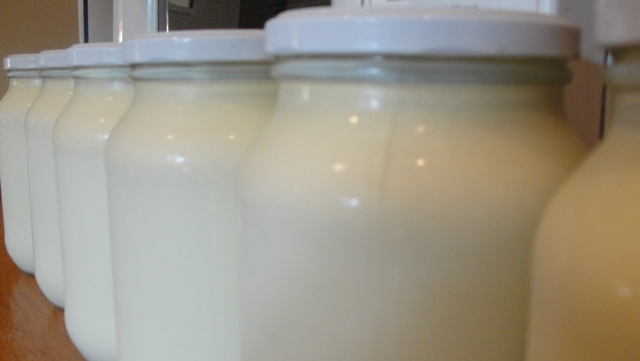
I drive to fetch milk (from 10 - 20 liters) from Lou Docker in Noordhoek every second week to make into yoghurt and soft cheeses. It's a lovely drive and I use it for thinking time if alone or take along a kiddo or two for company. I don't like to use this milk in tea and coffee, not because there is any wrong with it, but it does taste quite wild due to their feeding on the marshy land and scrub. For baking and yoghurt it is wonderful.

Our beef and lamb is ordered and delivered monthly via Alicia at Go Natural and have for the past 3 or so years. You can go to their website and subscribe to their newsletter and be notified of the dates for ordering by email.  All the regular cuts of beef and lamb are offered. We have found the beef mince to be superb and knowing that this is grass fed beef/lamb and that we are supporting a local farmer gives us peace of mind when we enjoy the meals made with it. We also get our nuts, seeds, sprouting seeds, honey, spelt grain and toothpaste from them.


The happy hogs

Pork comes to us monthly from Happy Hog Farm. Either my folks bring it through for us when they visit as they travel past the farm from their home on the Garden Route or we get a courier to bring it to us. Linda at Happy Hog is a gracious lovely woman who is passionate about her pigs and as we have been to visit the farm we know exactly what the conditions are for the pigs - and they are good! No sloppy pens and rubbish for food, really the best living conditions she can give them. As I write this blog post, one of her deboned shoulder roasts is slowly cooking away in a sage and garlic rub, filling our home with the most delicious aromas.

One of the chickens my son supplies. You pay for what you get, no brine, no fat.

Chicken is also eaten with relish and while we used to buy either the Woolworth or Elgin free range chickens we now only use my son's chickens which he gets from a farm on the Garden Route. I buy whole chickens from him and joint them for casseroles and use the carcasses for stocks and soups. He also sells bulk chicken breasts which we use a lot of. We also buy the eggs from him as and when we need them.


Indigenous Boschveld Laying Hens eggs.
I don't cook a lot of fish due to my sons allergies but when I do we try to get from The Little Fisherman always choosing sustainable species.

Our other basic staples are the dry foods which we get around the corner from us at Health Connections and we buy our supplements and oats, organic dry beans and a few other spices from them. These kind ladies are down to earth and appreciate our approach to eating food as close to it's natural state as possible and don't push weird esoterical philosphies on us.

We don't each much bread these days - maybe 3 loaves a week - but that I make myself from the spelt or Eureka Flours.
50% rye load made for lunch today.

As for the rest of the trolley, well we make our own cleaners now with the exception of dishwashing liquid. So I buy Earth Sap for our dishes, and we use soap nuts in the dishwasher. I must still write about soap nuts but I want to see if I can sort out some of the problems we are finding with them first. 


We make our own soap so I miss that isle, but I do buy Earth Sap shampoo and conditioner.

The lavender soap I made in May. We just started using it - rich and creamy.

We have a lady who delivers 100 toilet paper rolls to us straight from the factory and we don't use other paper products, so I miss that isle too.


So what fills my trolley at the end of the shop? A few speciality items, the few toiletries we need, some stationary sometimes, if my one daughter is with me she will sneak a small sushi tray in that I will pretend not to notice! There are some products which I buy that are not organic like tomato sauce to feed one child's addiction, mayonnaise as my children don't like my attempts, coconut milk, rice and some good red wine :-), obviously vinegar, bicarb, Sunlight soap and other things needed for cleaning, but that is pretty much it.

Lucky doing her daily garden inspection

As they too are part of the family, our dogs are also given the best we can and that is a raw diet. We did cook for them for 3 years but Zeus just got thinner and thinner. In January we switched them to Dog Matters which is premade raw dog mince, raw carcasses and pork bones. The mince is either chicken, beef, ostrich or venison in season. For breakfast they get 3 and 1 chicken caracesses each, at lunch Zeus gets a pork bone, Lucky finishes it off for him, and then at supper Zeus gets 2/3 of a mince pack and Lucky the other 3rd. This is delivered to our door every 2 weeks and stored in the freezer. We defrost as we go and it is super simple to implement. 
Newlands Spring

Lastly, this is not possible for everyone, but it is for Capetonians...we do not cook with tap water and distilled water is too pricey to use. Weekly my son and I, sometimes Superman, will go to the Newlands Spring for 75l of water...this is for drinking, mainly cooking...and its FREE!


Thursday, July 26, 2012

Can we afford to eat free range, organic and fair trade food?

It's late, much later than I would usually find myself sitting here writing a blog post, but I have this question burning in my mind that I need to get out into cyberspace. Incase you missed the title the question is: "Can we afford to eat free range, organic and fair trade food?"

You see the more I look at mass food production the more I know that my conscience and my health cannot carry the cost and that frugality can never be an excuse for me to buy food that I do not trust. Perhaps I should say what spurned my needing to put my feelings into words, yet again, about knowing the source of, if not all, most of your basic foods.
Eggs - fresh and glorious.

When we started growing vegetables in 2008 we realized how long it takes to actually produce a decent carrot, a healthy butternut and a harvest of spinach. Doing it with only natural soil, compost and worm tea takes a whole lot longer and as we decided to not use any pesticides the produce almost never looks perfect. This makes one question what is actually happening to the food that is grown and that we buy off the store shelf.

We soon found a source for free range pasture fed beef, chicken and pork and got to know the farmers and could trust their word. This makes another question surface - how do the rest of the creatures live and die? We quickly formed the opinion that if we were going to eat meat we would eat only that which we know has lived a good life and died humanely. Now vegans may have a problem with this completely and I understand your viewpoint, but we choose another way.

Celery giving us a second round!

With the beginning of my son's chicken and egg business we again affirmed that we really need to know where our food comes from and whom we are supporting with our hard earned cash. He recently had to do a report for his school work and he wrote a piece on battery chickens (see his blog in the link above).

Further to this, yesterday I had the most delightful visit from a woman who is busy with her thesis at Stellenbosch University on sustainable agriculture and wanted to see what we are doing here on this tiny scale. While we were chatting again God was confiming in my heart that we have not "lost the plot", we are not "slipping off the deep end" but that this is part of His plan for our family. Why? I don't have all the pieces of the puzzle, but we continue on under His guidance.

Handmade pastry - getting up close and personal with food

This meeting helped me cement in my mind that we can afford to eat free range, organic and fairtrade produce because not only is it right for us to support those who are being wise stewards with the earth and it's creatures, but it is also the best thing for our bodies that He gave us to take care of.

So how do I know that we can afford free range meat, organic and fairtrade products? Well this is how I think:

1. We make our own cleaning products - soap, vinegar and bicarb for the house, laundry soap or liquid.

2. We cook from scratch every day 3x a day.

3. We hardly ever eat out - it always leaves us feeling greasy and gassy and yucky...reason enough.

4. We do home based entertainment, anything else social for the kids they pay for with their own earned cash.

5. We grow as much of our own veggies as we can.

6. We keep chickens for their lovely eggs, companionship, bug removal and manure.

7. We are careful about using our car on a whim....

Which means that there is more disposable income for good clean food, organic products and far trade items.
Stock - using up leftovers, offcuts and giving us nourishment
I am sure there are more, but this is off the top of my head (and late at night for an early bird). Perhaps for others there may be more hints that you have and will care to share, so please leave your comments for other to read.

Links:
The short unnatural life of a broiler chicken
Notes from the frugal trenches
Down to earth simple living series