Showing posts with label green-living. Show all posts

Sunday, February 15, 2015

The slog and the blessing of a vegetable garden

One of the reasons why I love hearing comments from new veggie growers is that it inspires me to keep going. Everyone who has tried to grow vegetables on a large scale for home use knows that its 90% labour and 10% pleasure - that is until you put your first salad on the table.

Strawberry popcorn

 We put our first plant in the ground in June 2008 on this property and it was so exciting! The excitement continued for 2 years as we claimed more and more ground for vegetables and fruit. Even though we spent most weekends either directly in the garden, processing the pickings or sowing seeds, there was a huge measure of joy. At least there was for me! I think Superman and the kids may have felt a little differently, but in my effervescence I *may* just not have felt their reticence.

Leeks
At the end of 2010 my back was so sore from the lifting and carrying, the digging and bending, that I had to pull right back and focus on repairing my back, resting and becoming pain free again. It was a sad year for me watching the weeds take over, having to buy almost all of our vegetables again and making very little progress towards our self producing goals.

Healthy granadilla vine
We bounced back a little in 2013 and 2014 and of course, having Sam here each Friday is a HUGE blessing as he takes care of the slog part of vegetable gardening. He does the lifting and the carrying, turns the compost, digs it in, prepares beds and more. We couldn't continue to do what we are doing here without Sam.

New lemons
As I look into 2015 I hope that we will get up to full production again. I see it now as a Sam and I journey as my children all have other goals they are pursuing at the moment. Life really does change quickly...Back in 2008 we were all working together, but now with two homeschool grads, one who is engaged to be married, another pursuing a career option which has taken us all happily by surprise and both of them working in Funky Chickens there is little time for them to get involved beyond watering and picking the harvests. The younger two are still busy with homeschooling doing Gr 10 and Gr 7 (more or less - you never know with us homeschoolers which grade they are actually in!) and following their passions in different ways, are more involved in food preparation than gardening.

So it is a Sam and I thing.

Chives
In all vegetable gardens there are those slog chores - weeding, feeding plants, composting, watering, raking and others. But there are also those fun chores like planning, sowing seed, watching things grow (it still amazes me every time!) and harvesting...oh! and of course rolling the delicious foods around your mouth as you savour home grown goodness!

Cavelo Nero - Kale

It is the anticipation of the foods that makes gardening a blessing when it takes time from other pursuits, or when you have to drag a hosepipe around the garden, or when its hot and you have just one last patch to plant...I think about the crisp fresh salad on my plate or like tonight a slow cooked bolognaise using a thick fragrant roasted tomato sauce from our tomatoes, or strawberries hot from the sun into your mouth. Nom!

Maroon beans!

We often talk about one day when the children are grown and moved out as to whether we will sell this home...while at the moment it seems small as we are 6 people with big personalities living together, working together, learning together...but it may be just too big for Superman and I when we are alone one day.

Jalapeno

Who knows?

So we keep on planting and learning about growing food. I try to find a new place each year for fruit to grow (this year it was two apple trees, a lemon tree and two granadilla vines) or plants to combine in a small space or how to make the large are of paved ground still be productive...and one day if someone want this little urban farm, then it would be their choice to carry on what we have started or convert it back to a normal tailored garden.

Sunflowers at my pond

But even now after counting the cost in many ways for starting on this adventure, I think we will soldier on for the reward of some, not all, our vegetables, salads and fruits grown at home.

Friday, October 24, 2014

5 reasons why people don't grow vegetables

Having just returned from the UK on a lovely visit with my sister and her family we returned to find our garden into the full swing of spring.

One of the gardens yesterday
The tiny seedlings that were planted before I left are knee high, spinach has bolted, potatoes are ready to be dug out, tomatoes putting out their first flowers and cucumbers climbing up their trellis.

What a joy to know that from now on we will be eating daily from the garden. There is a huge amount of satisfaction in walking through the garden and seeing food for today, some for tomorrow and others for later in the month growing there.

It is pesticide and fertiliser free attested to the fact that bees and butterflies are visiting, snails and slugs hide under the lettuces and caterpillars munch away at the leaves of the brassicas.

Cucumbers in a barrel
It got me to thinking about why people wouldn't want to grow some of their own vegetables and I came up with a few thoughts based on what people have said over the years. I hope my thoughts on each of these will help you climb over your obstacles and embrace a little bit of veggie growing.

1. SPACE

While this may seem like a big problem it is actually only relative to what you want to grow. Even on our 300 m2 of arable land there are things I would love to grow but can't due to my space constraints. You simply need to grow what you can in the space that you have. Herbs can grow in containers on sunny windowsills, pots on balconies or like I do in pots on our paved area near the pool.

Making use of vertical space means that you can make a door sized bed and grow something climbing (beans, cucumbers, peas) in the centre of the bed, then grow something hip height around the outskirts of those plants like tomatoes and then right around the side of the bed you can grow herbs like basil or coriander.

Strawberry baskets dot all our walls
If you don't have a garden you can use a balcony to grow any of the plants mentioned above with some clever planning using pots and some form of climbing frame.

2. TIME

Tomatoes with their first blooms
I understand time constraints well. 4 children, homeschooling, home business, sports and cultural events, cooking from scratch, a menagerie of animals doesn't leave much time to twiddle my thumbs.

And, yes, I will admit that in the beginning it took time to establish a veggie garden and there are crunch times when you have to get plants into the ground or harvests processed but in general I do not spend more than 2 hours a week directly involved in the garden.

You need to simply decide what time you do have available and decide if you want to spend any or all of it in the garden. If you don't, then I wonder why you are reading this blog... :) :) :)

I also have Sam now to help me on a Friday which is has taken a huge load off my shoulders trying to keep up with the weeds, heavy garden work and general maintenance. We used to do this all until recently but with the current levels of work and study for my children I simply can't take up a whole day to work.

Sam has been a Godsend to us and has brought back the enjoyment of being able to do the nice things like sowing seed, planting out, tending too and harvesting.

Globe Artichoke

3. KNOW-HOW

If you are like my Superman you want to know all the ins and outs before taking the first step. If you are like me, you will jump in with both feet when the idea grabs you. Together Superman and I make a good team balancing the need for knowledge with the ability to "just do it".

There are those out there who want to know all about soil ph and what to feed to which plant when, I honestly couldn't be bothered. I do know enough about what a plant likes - for instance our Blueberries need an annual dose of pine needles or Rooibos mulch - but I have gardened simply for a long time now making sure we feed the soil lots of compost, worm tea, Bounce Back, bone meal and making sure that I plant a legume in a cycle throughout the beds in a year. I believe the plants take what they need from the soil and as we replenish with each new planting they will be fine.

There is a vast amount of information to get started on the internet and in print. These books all pretty much say the same thing so getting one good book on growing vegetables is all you need. Troubleshooting is nice to do on the web as its quick to see what the plant needs, Youtube is a stellar place to go for gardening inspiration and you are welcome to join our little FaceBook group here to ask your questions.

4. FEAR

Potatoes harvested yesterday
One of the things I needed to overcome was if after putting money into establishing raised beds we would face a crop failure and waste all the money. Well we have had lots of crop failures, but it wasn't money that I was worried about as I watched tomatoes die of blight, potato crops not come to pass, corn form weird kernels after waiting for them for 3 months...I was sad because of wasted time and then the loss of money.

Other people have told me they fear getting started and the commitment, others who worry about what people will say or not having the know how (see above). When we started we had a lot of people joke about our farm, neighbours who told us our compost heap would attract rats (we got cats to silence that) and our children would tell their friends they lived in a cottage plonked in the middle of a vegetable garden. I really do not worry about what other people have to say about our choice and we make sure our animals (read:chickens) don't bother them.

Perhaps fear of failure is something in your life, but I guarantee it manifests in other areas and is not directly related to veggie gardening, go on...give it a try...grow some tomatoes in a pot and you will soon overcome your fear.

5. LAZINESS

Well, we all struggle with this in one way or another, don't we? There are so many things that pull at us in this age that we live in, not just living life but cyberspace can gulp up loads of time. Then we have a moment to ourselves and what we choose to do with it is between you and yourself. If you don't want to grow veggies because you are lazy, then so be it.

I would challenge you though that when you put the first lettuce in a bowl, peel your first carrot or dig up your first potato, this act will become more enticing than the couch, TV or FaceBook. But like I said, its between you and yourself.

I am sure there are other reasons people don't grow vegetables, but these were the ones I thought about today while enjoying beautiful spinach, broad beans, onions and potatoes during the day's meals.

Voted the Beauty of the day

Monday, August 13, 2012

Simple Green Living is sold


Dear Followers, 

Simple Green Living is sold.This website was a wonderful way to get a message out that we need not be weird and whacky to be green, just by making some simple choices in your home and the way you live and the choices you make.

It has however got to the stage that there are just too many distractions for me to actually achieve what I want in my life, family and home. The biggest thing is spending more time in the Word of God and not having my afternoons and weekends so limited by online work.

You see, I have 3 other websites and an offline business to attend to, so as these are priorities I need to let go of what is not.

With the site goes the Facebook group and also the Facebook account which I only used in a professional capacity. But FB is not a place I want to spend anytime in, I rather want to be living life fully with my Lord and family. 

So the man who is buying my site will continue the group, if you want to stay. 

Please remember that you can always follow my blog if you don’t already via email or if you are a blogger yourself. I love hearing from you there!

Kind regards
Wendy

Sunday, July 29, 2012

Like a merchant ship...

On Mondays I do a quick weekly shop now as it fits into my week better than a Saturday morning. Over the last 4 years I have gone down from having a "two-trolley" monthly shop to a 1/4 trolley weekly shop. I never noticed the reduced amount in it until this past Monday and was quite surprised and pleased. I wrote an article a couple of months ago entitled "Does Your Grocery Trolley Reflect Your Green Values?" and I didn't feel like a hypocrit pushing my trolley around Pick 'n Pay.

Our chickens, we have 10 and delight in them.
In the book of Proverbs in the Bible a wife of noble character is described as being and doing many things. But verse 14 says: "She is like the merchant ships loaded with foodstuffs; she brings her household’s food from afar." This is not talking about "food miles" but rather the ability to source the best she can for her family. So as I was pushing my trolley the Lord brought this verse to mind.

Broad beans about to come into full swing

A few days ago I shared that we eat free range pasture fed meat, chicken and pork so for those in Cape Town I thought I would share a little bit about these sources and then for those elsewhere you may be inspired to try and reduce how much you buy from the store but rather get straight to the source of your foodstuffs and build a relationship with the local farmers. I am also going to briefly touch on how else you can reduce your dependence on shops, so if I ramble a little, forgive me and enjoy the rabbit trails :-)

Food can be broken down into a few places for our household. The first is fresh foods. My first place to "shop" is obviously the vegetable garden. I see what is in and plan to use it that week. So for this week we have cauliflower, spinach, peas, Asian greens and herbs. Whatever else I need in the fresh department I get from the veggie man who comes to my door each Tuesday. When I pop into Woolworths for their specials and our drinking milk I will pick up any other seasonal veg we need. I do not buy at Fruit & Veg as their stuff is generally below standard and goes off quickly. Of course our chicken's give us lovely eggs - about 15 a week but we need more.


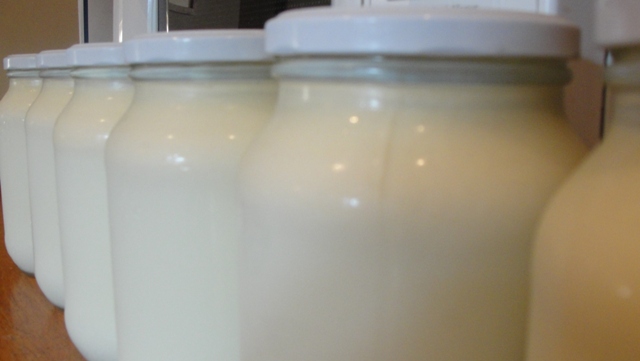
I drive to fetch milk (from 10 - 20 liters) from Lou Docker in Noordhoek every second week to make into yoghurt and soft cheeses. It's a lovely drive and I use it for thinking time if alone or take along a kiddo or two for company. I don't like to use this milk in tea and coffee, not because there is any wrong with it, but it does taste quite wild due to their feeding on the marshy land and scrub. For baking and yoghurt it is wonderful.

Our beef and lamb is ordered and delivered monthly via Alicia at Go Natural and have for the past 3 or so years. You can go to their website and subscribe to their newsletter and be notified of the dates for ordering by email.  All the regular cuts of beef and lamb are offered. We have found the beef mince to be superb and knowing that this is grass fed beef/lamb and that we are supporting a local farmer gives us peace of mind when we enjoy the meals made with it. We also get our nuts, seeds, sprouting seeds, honey, spelt grain and toothpaste from them.


The happy hogs

Pork comes to us monthly from Happy Hog Farm. Either my folks bring it through for us when they visit as they travel past the farm from their home on the Garden Route or we get a courier to bring it to us. Linda at Happy Hog is a gracious lovely woman who is passionate about her pigs and as we have been to visit the farm we know exactly what the conditions are for the pigs - and they are good! No sloppy pens and rubbish for food, really the best living conditions she can give them. As I write this blog post, one of her deboned shoulder roasts is slowly cooking away in a sage and garlic rub, filling our home with the most delicious aromas.

One of the chickens my son supplies. You pay for what you get, no brine, no fat.

Chicken is also eaten with relish and while we used to buy either the Woolworth or Elgin free range chickens we now only use my son's chickens which he gets from a farm on the Garden Route. I buy whole chickens from him and joint them for casseroles and use the carcasses for stocks and soups. He also sells bulk chicken breasts which we use a lot of. We also buy the eggs from him as and when we need them.


Indigenous Boschveld Laying Hens eggs.
I don't cook a lot of fish due to my sons allergies but when I do we try to get from The Little Fisherman always choosing sustainable species.

Our other basic staples are the dry foods which we get around the corner from us at Health Connections and we buy our supplements and oats, organic dry beans and a few other spices from them. These kind ladies are down to earth and appreciate our approach to eating food as close to it's natural state as possible and don't push weird esoterical philosphies on us.

We don't each much bread these days - maybe 3 loaves a week - but that I make myself from the spelt or Eureka Flours.
50% rye load made for lunch today.

As for the rest of the trolley, well we make our own cleaners now with the exception of dishwashing liquid. So I buy Earth Sap for our dishes, and we use soap nuts in the dishwasher. I must still write about soap nuts but I want to see if I can sort out some of the problems we are finding with them first. 


We make our own soap so I miss that isle, but I do buy Earth Sap shampoo and conditioner.

The lavender soap I made in May. We just started using it - rich and creamy.

We have a lady who delivers 100 toilet paper rolls to us straight from the factory and we don't use other paper products, so I miss that isle too.


So what fills my trolley at the end of the shop? A few speciality items, the few toiletries we need, some stationary sometimes, if my one daughter is with me she will sneak a small sushi tray in that I will pretend not to notice! There are some products which I buy that are not organic like tomato sauce to feed one child's addiction, mayonnaise as my children don't like my attempts, coconut milk, rice and some good red wine :-), obviously vinegar, bicarb, Sunlight soap and other things needed for cleaning, but that is pretty much it.

Lucky doing her daily garden inspection

As they too are part of the family, our dogs are also given the best we can and that is a raw diet. We did cook for them for 3 years but Zeus just got thinner and thinner. In January we switched them to Dog Matters which is premade raw dog mince, raw carcasses and pork bones. The mince is either chicken, beef, ostrich or venison in season. For breakfast they get 3 and 1 chicken caracesses each, at lunch Zeus gets a pork bone, Lucky finishes it off for him, and then at supper Zeus gets 2/3 of a mince pack and Lucky the other 3rd. This is delivered to our door every 2 weeks and stored in the freezer. We defrost as we go and it is super simple to implement. 
Newlands Spring

Lastly, this is not possible for everyone, but it is for Capetonians...we do not cook with tap water and distilled water is too pricey to use. Weekly my son and I, sometimes Superman, will go to the Newlands Spring for 75l of water...this is for drinking, mainly cooking...and its FREE!


Thursday, July 26, 2012

Can we afford to eat free range, organic and fair trade food?

It's late, much later than I would usually find myself sitting here writing a blog post, but I have this question burning in my mind that I need to get out into cyberspace. Incase you missed the title the question is: "Can we afford to eat free range, organic and fair trade food?"

You see the more I look at mass food production the more I know that my conscience and my health cannot carry the cost and that frugality can never be an excuse for me to buy food that I do not trust. Perhaps I should say what spurned my needing to put my feelings into words, yet again, about knowing the source of, if not all, most of your basic foods.
Eggs - fresh and glorious.

When we started growing vegetables in 2008 we realized how long it takes to actually produce a decent carrot, a healthy butternut and a harvest of spinach. Doing it with only natural soil, compost and worm tea takes a whole lot longer and as we decided to not use any pesticides the produce almost never looks perfect. This makes one question what is actually happening to the food that is grown and that we buy off the store shelf.

We soon found a source for free range pasture fed beef, chicken and pork and got to know the farmers and could trust their word. This makes another question surface - how do the rest of the creatures live and die? We quickly formed the opinion that if we were going to eat meat we would eat only that which we know has lived a good life and died humanely. Now vegans may have a problem with this completely and I understand your viewpoint, but we choose another way.

Celery giving us a second round!

With the beginning of my son's chicken and egg business we again affirmed that we really need to know where our food comes from and whom we are supporting with our hard earned cash. He recently had to do a report for his school work and he wrote a piece on battery chickens (see his blog in the link above).

Further to this, yesterday I had the most delightful visit from a woman who is busy with her thesis at Stellenbosch University on sustainable agriculture and wanted to see what we are doing here on this tiny scale. While we were chatting again God was confiming in my heart that we have not "lost the plot", we are not "slipping off the deep end" but that this is part of His plan for our family. Why? I don't have all the pieces of the puzzle, but we continue on under His guidance.

Handmade pastry - getting up close and personal with food

This meeting helped me cement in my mind that we can afford to eat free range, organic and fairtrade produce because not only is it right for us to support those who are being wise stewards with the earth and it's creatures, but it is also the best thing for our bodies that He gave us to take care of.

So how do I know that we can afford free range meat, organic and fairtrade products? Well this is how I think:

1. We make our own cleaning products - soap, vinegar and bicarb for the house, laundry soap or liquid.

2. We cook from scratch every day 3x a day.

3. We hardly ever eat out - it always leaves us feeling greasy and gassy and yucky...reason enough.

4. We do home based entertainment, anything else social for the kids they pay for with their own earned cash.

5. We grow as much of our own veggies as we can.

6. We keep chickens for their lovely eggs, companionship, bug removal and manure.

7. We are careful about using our car on a whim....

Which means that there is more disposable income for good clean food, organic products and far trade items.
Stock - using up leftovers, offcuts and giving us nourishment
I am sure there are more, but this is off the top of my head (and late at night for an early bird). Perhaps for others there may be more hints that you have and will care to share, so please leave your comments for other to read.

Links:
The short unnatural life of a broiler chicken
Notes from the frugal trenches
Down to earth simple living series

Saturday, June 23, 2012

My kitchen ~ My Factory

As each season passes my kitchen is transformed into a different kind of factory. Sometimes it is a canning factory specializing in jams or chilli preserves, other times its a soap factory. It is however a permanent food factory the name of which changes with the day of the week. Here are some of my factory photos of the past few weeks...
Various types and stages of citrus cleaner

Cream cheese

20 litres of milk waiting to be turned into yoghurt and mozarella

20kgs of black mission olives in brine

Loaves of bread for hungry tummies
Chicken and beef stock made today

Indulging in pasta this week freshly made in my factory
I know other woman who also have mini factories running in their kitchens...what did you make in yours this week?

Saturday, June 16, 2012

What the last 4 years have taught us


This blog started in April 2008 when we were in the planning stages and were just going to make a little patch for herbs and salads. Then in June 2008 our family started a real vegetable garden as I wanted a patch of ground to grow a few veggies for my family. We started with 5 raised beds and a whole lot of hope and expectation of what great yields we would get.

2008 sees us all enthusiastic and making a start
This blog documents our struggles and victories and all our learning curves. The lessons that we have learnt fall into a few main categories, but please remember that as you look at our blog now and think there is so much we do...this was over a 4 year period that we learnt and grew and tried and developed.

Food
A few months after we put our first seedlings into the ground which we had bought from the nursery, we were able to pick our first salad. It was with much ado that the bowl was placed on the table and we marvelled that we had produced FOOD.

Something clicked in our thinking that we could be producers not merely consumers. This led us to expand our veggie growing areas over 3 years to encompass our whole yard space. Having 900sq meters for our plot and about 400 of that taken up with paving, home and outbuildings we have approximately 500sq meters to grow food on. Take off a bit for pond and pathways, we still have a decent space for this.

The biggest thing that we learnt was to keep our expectations in check. You can’t but help naively believing as you sow your seeds, that every seed will produce fruit, but this is sadly not the case as some do not germinate, others that do are attacked by pests and yet others mysteriously die. 

Seeds sown in newspaper pots
We also switched quite early on to growing from seed. A lot of what we use are heirloom varieties, others simply organic and we still grow some hybrids. This opened up a whole new learning curve in planning how much needed to be sown and what the best way was to do it.

Now I don’t feel faint when we sow 100 corn seeds into newspaper pots or 50 tomato plants into the ground. This is what it takes to feed us in season. I say "in season" because we are yet to have surplus to can for out of season use. Luckily our climate allows us to grow year round so while we may not have tomatoes on our shelves for winter, we have a variety of other veggies to eat.

First years corn...feast!
Once we got close to our vegetables like this, we started asking questions about where the rest of our food was coming from. We paid special attention to the “suspect” foods that are treated with hormones and antibiotics like beef, pork and chicken. Finding sources for these items became important to us as we read and learnt about the treatment of animals in feedlots and ultimately what was left in the meats which ended up in our bodies.

Chillie preserves
Other things that spiralled off from growing our own fresh food over the 4 years are:
Cooking from scratch
Using up left overs (more on this below)

Waste
One of the first things that we did was start a compost heap and set up a recycling system. Our bin used to overflow on the day of the rubbish pick up but within a month we were down to a half filled bin just because of these two waste disposal systems.
Compost heaps in the car port.
Compost heaps and wormeries are two of the simplest things to implement and you can take this to any level – making your own wormery or bin or buying one if you can afford. All our green garden waste no longer was seen as waste but as treasure for our garden as we added the leaves and lawn cuttings to our heap. We feed our worms weekly on our peels and green scraps and suddenly we were getting liquid fertilizer for our plants.

I also had to address cooked food waste in our home. Before this time I used to be very quick to throw away left overs or fruit and veg that were soon to go over. Now all things are collected and added to something I am cooking. Mash ends up in gnocchi, soup ends up in stews, chicken carcasses end up in stock all helping towards the greater goal of mindful frugal living.

Recycling then needed to addressed as we realised that we could not continue to generate that amount of plastic, glass and metal waste with a clear conscience which meant that we needed to reduce the use of items in these containers. This meant that we would have to find ways to grow or make things ourselves and then keep them in a way that they would not deteriorate like canning and freezing. This lead into the next point...

Learning Skills
Besides for the food that we were now producing which gave us, and still gives us, great excitement, learning certain skills in running a small urban farm had such a WOW factor. I have learnt to make soap and am getting more and more adventurous with how I do this. My sons have learnt woodworking and practical skills like how to plant potatoes and make fences for example. My daughters are learning to cook from scratch, can and preserve, to make super nutritious stocks, sow seeds, plan a garden, sew and mend and all of us are learning to live in the season of life.
Young seamstress
I know that the skills I learn and then teach to my children will affect generation after generation and while I am no doomsday prophet, I do believe there is coming a time when our children and their own children will need these simple skills again that are lost to the 21st century. 

Other skills I have learnt:
Soft Cheese Making

Character
One of the things that we didn’t expect to be so overwhelming was the demand on our time and family capacity. When we invested in the materials to convert our garden to a mini farm we also had to make sure that we would then be good stewards of this project. The wood, stones, fences and compost were expensive and we needed to make sure that we got our money back. This meant giving up doing certain things so that we could keep the little farm going, sowing seeds, harvesting food and more. 
Hard work shredding garden refuse
It builds your character when you have to go and shovel compost into vegetable beds, but you would rather be lying in a warm spot with a book. It builds character when you know that spring is around the corner and you need to sow 500 seeds so they can be planted in September. It builds character when you have to weed yet another bed because they have sprung up again in the two weeks since their last appearance. It builds character in my sons when they have to care for their 10 chickens instead of playing guitar or Lego.


My children used to be embarrassed by their weird mama who grew vegetables instead of flowers and knitted while waiting at exams, now they laughingly say they live in a vegetable garden with a house plonked in the middle. They have learnt the difference between work (hard, hard work often!) and rest and they are always the first to notice the difference in the food that was grown right outside the door and cooked very soon after harvesting.


We never knew all the things that would spiral off our decision to grow our own vegetables but now, 4 years later, we look back and are happy with what has developed. There are some things that we would do differently now that we have hindsight, but we have carved out a little path here for ourselves and we walk on wondering what more we will soon be learning.


Sunday, May 20, 2012

Holes in my spinach and chewing the cud...

I don't mind holes in my spinach. I would rather have holes that perfect spinach that has been made toxic with pesticides. So when I went to get spinach tonight I picked a lot of it and we enjoyed it with our Thai chicken after washing it well :) While picking the spinach I could see the promise of things to come...

Sweet potatoes trailing their way across the soil.

Beets full of life after the weekends rain.

Broadbeans starting to flower.

And the garlic, bedded down for winter. I really need to weed this area!


I was also chewing the proverbial cud about my latest decision to be made...our backyard. I happened to watch these videos again on a couple who produce about 250kg of food in summer off 90sq m. When I made the connection that our paved backyard is about that space, my mind starting ticking over.


Our backyard has some strawberry baskets and barrels which I plant with seasonal veggies. Sometimes its tomatoes and peppers but now I have just planted peas in them. Two of the barrels have asparagus in them but as they die down in winter I can plant surfcae crops, like peas, for winter. We also have our potato planter prototypes there as we experiment

This pot is covered to prevent the chickens getting in there and scratching everything up while they wander about during the day.

Our backyard houses Superman's business premises and the kid's music room. It also has the pool and the dog kennel. Our washing hangs here everyday and it's where we braai with friends. Right at the back is the chicken coop and workshop. But even with all these things there is plenty of space for a well planned container garden.

The great deliberation is:
1. do I have time to add more food growing
2. how to protect the plants from the chickens
3. the cost involved in container gardening

Well, no resolution as yet...the jury is still deciding...but just sharing my thoughts. What are yours?