Showing posts with label seedlings. Show all posts

Saturday, April 18, 2020

Growing food in a time of crisis

We started growing food in 2010...I thought it would be a good life skill for my then 4 homeschooled children. For the next 8 years we slowly converted our whole garden to vegetable, fruit and herbs.

It was hard work, not just the sowing, composting, planting, weeding, watering and harvesting but the processing when the food was ready.


It is so much easier to just open a bag of lettuce leaves and dump them in a bowl...but when you have to pick and wash the leaves, pick the tomatoes, check for bugs - which always come along with organic veg - spin them dry and then make the salad, your salad making goes from 10 minutes to 30.


In 2016 when the drought hit Cape Town hard, we reduced our vegetable beds from 15 to 5. Where the 10 stood we changed into Fynbos and indigenous plants which could survive the drought. The 5 beds that were left took all the borehole water we were able to spare and the fynbos had to just manage on itself.


Yet here we are today amid the CoVid-19 pandemic and our Fynbos garden is blooming in the autumn sunshine and out small vegetable patch supplying what we need for the 3 of us that still live here. And with the time created by lock down the vegetables are getting extra love and care.

Planting out the winter seedlings today, reminded me of what food security is and where it comes from. It first comes from our Heavenly Father who has provided seeds for planting, rain from heaven and sunshine. It secondly comes from knowing that you can grow food, if not all, some of it no matter where you live and how much space you have.


Take a look back over the posts labelled on the side for ideas of what to plant in pots on windowsills, in larger pots on balconies, or how to pull up your lawn and grow on a larger scale like us. Either way, use the time to learn this skill...it really is rewarding. 

Sunday, August 3, 2014

Motivation is a slippery thing

Motivation = the condition of being eager to act or work: the condition of being motivated.

I am simply not motivated to do what I need to do in the garden right now. It is the first time in all these years that I have 4 veggie beds standing fallow.

Fallow in itself is not a problem, it is good for the land to rest, however I had planned a rest for the ground next year.


I have been asking myself why I am not motivated to get my hands dirty, sow the seed I need to sow and then watch and wait with the eager anticipation that I know I feel when the first heads of the plants peep above the soil.

We all know it is cold at the moment, but I have gardened in the cold many many times and loved it so this is not the reason.

My paper plans are done, seeds bought, newspaper pots made...so it not as if there is any reason to not just do it!

I have never struggled with procrastination, yet here I sit and write about doing something in stead of actually doing it! Go figure????

Lined up on my dining room table is everything that I need to get my first spring seedlings going...will I find the motivation to do it today?


Sunday, April 13, 2014

Back to basics

Everyone looses perspective sometimes. We also get overwhelmed and stressed. Sometimes we are to blame because we try to do too much, when we don't count the cost, in time or money, before committing to a new project or simply because life throws a series of curveballs at you for whatever reason.


I have come out of a very fulfilling but tiring time of 8 weeks of giving and giving and giving. The job is done and now I need to pick up the pieces of my life again and find the lovely rhythm of my days, weeks and seasons.

The only way I know how to do this is by getting back to basics.

First I prune back my life which includes our children's commitments outside of the home, I say no to more things for myself that would draw me away from my first priorities - which in my life are time sitting at the feet of my Lord Jesus, connecting with my husband, mentoring my children in their different stages of life, guiding their education needs, being busy in my home growing then preparing the right food for us and finding a place to just breathe.
This process started over the last two weeks and today has found me at home on Sunday with nothing on my to do list and the freedom to rest, sleep, read...or type a blog post! :)

Things that have slipped through my fingers this year has been making sure the basics are attended too. No soap was made, no bread made, and because I refuse to eat the toxic shop bought breads, no bread eaten either. Meal plans were not done and garden planning, sowing and planting not attended to. Cupboards and drawers were in a shambles, and the chaos and time wasting that resulted from this was frustrating.

Soap cooling slowly. I will cut it tomorrow. This gives us enough bars for 3 months.

Getting back to basics allows me to see what is important and what I value and how much a simple thing like making soap or bread, or having orderly shelves, means to my family as well.

So today I made Down To Earth's plain lovely rich soap. This will cure for 5 weeks and be ready for use. A similar soap that I buy at the Earth Fair market costs R20 per bar. I can make soap for 18 of the same size bars at R20 for all 18!

These are some we made two weeks ago and were never filled. Sam made another 3 trays on Friday.

Making sure that I have newspaper pots for seed sowing is also something I got going again this week and we have 5 beer boxes of pots ready for seeds which I will sow this week.

My mom gave us this Can-O-Worms in 2008 and it is still working well.

Our wormery also needed attention as we use the worm tea all the time for our fruit trees and strawberries. Switching around the trays and feeding the worms was also on the agenda.
Each Tuesday Superman fetches 3x25 litres of water from Newlands Spring for our drinking and cooking.

One of our water bottles that we use to collect spring water has had green algae growing on the sides and allow strong vinegar water to stand in it for a day or two will solve this.

What a joy to move quietly and smoothly through my day doing some simple tasks that reap huge rewards.

What simple tasks do you enjoy that "ground" you in your home?

Saturday, March 22, 2014

Round about on our little patch of Earth

Things have been rather kitty-fied around here for a while...


Getting school done is hard when you have cats on your books.


Old Boy Buster spends a lot of his time sleeping but is still confined to the few rooms and isolated from the other animals. He takes up a lot of my time in the evening which used to be gardening time with the other cats :) but its just a season. I think.


Even so, a few things are growing and healthy, mainly thanks to Sam.  This past Friday he prepared the asparagus for winter by cutting them back and composting the ground around. He has also tenderly nurtured the beets, carrots, turnips and spinach he planted 4 weeks ago.


Our coop is done and really nice now...big enough for me not to fret if the girls don't go out for a day. They just wander around and sand bathe, scratch and eat what we give them. They are shut up snug and tight and with winter pushing in on the fronts of the breeze I am glad we made this choice.


And joy of joys - after 5 years of trying to find just the right spot for a granadilla, the 7th and 8th plants I have tried are growing beautifully.


 Little bits and pieces of our lives...how are you doing?


Sunday, September 29, 2013

Let's get planting!

Yesterday the weather was very obliging and we got a lot of planting done. We planted about 50 corn plants, 15 courgette plants, 6 butternut plants, one bed of potatoes and we repotted strawberry plants and transplanted the tomato seedlings into their new temporary homes. Our chillies, like all chillies, are taking the long slow lazy route to growing and will sit tight for a few more weeks until they are big enough to be planted out.


So here's the low down on planting out your seedlings...

If you started them indoors like we did you need to acclimatise them to the outdoor life for a week or so before settling them into the ground. We did this by putting our trays outside during fine weather and bringing them indoors overnight.

While you were waiting for the seeds to grow, you should have prepared your garden beds with compost, bone meal and volcanic rock dust or something similar. Remove any weeds and dig them over well. I know there are those out there that use a no dig method - I don't.

Seedlings should never dry out so even once you have planted them, do not let them go thirsty but don't  overwater either. I like to give them a good drink of worm tea just before I plant them and then water every second day.

The experts say that seedlings should be planted out in the evening when it is cool, but this does not work for me as my energy levels are too low at that time so it is early morning and a good watering to get them through the day.

New seedlings need protection too. In our home its from cutworm, slugs, snails and cats! If you are still concerned about frost you can collect up 2 litre plastic cool drink bottles and cut the bottoms off. Place the top portion over the plant. This is good for most smaller plants.

Our courgettes were too big for this treatment so I used small metal climbing frames that I had lying around which will stop the cats digging them up.

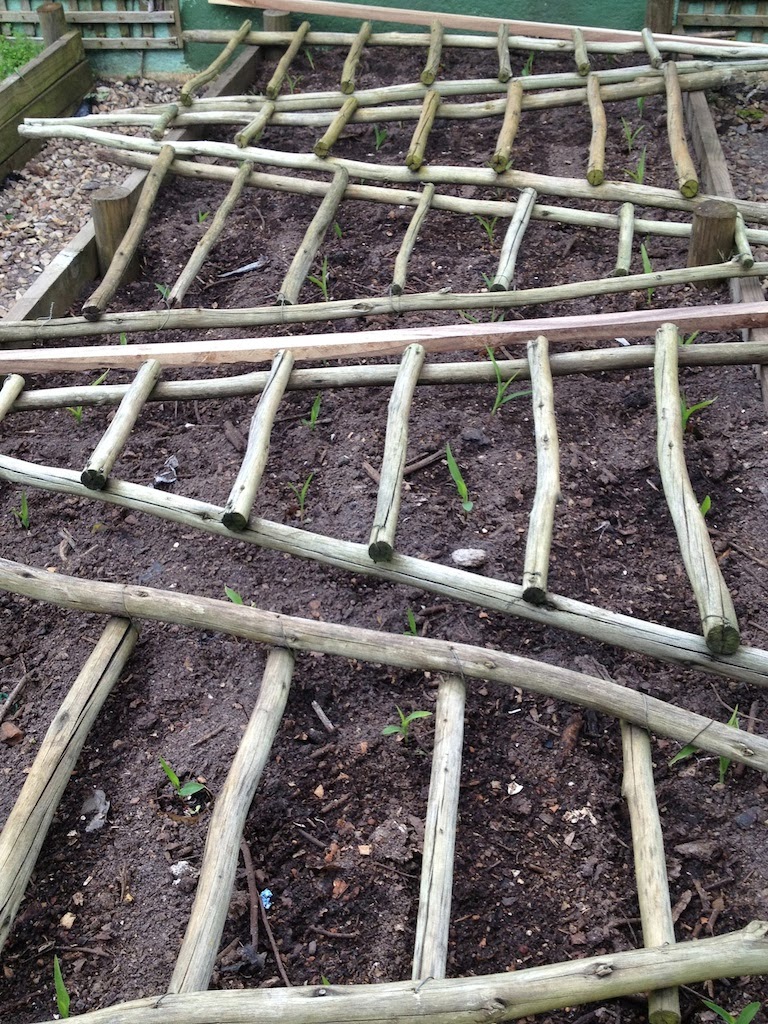
The corn we planted just had old trellises put over the beds which is sufficient protection for them. Every morning and evening I go snail collecting in the garden and feed them to the chickens so that is how we handle those critters [evil grin]!


Planting out tomatoes are an exception to the rule. Once you have a "true" leaf on each of your seedlings, which can take about 1 month, you need to repot them into a slightly larger pot slightly deeper than before. This causes the stem to be thicker and stronger and a bigger root system to develop. You should do this 3 or 4 times before their final planting out.

Potatoes are sown in the valleys of ridged ground and as the green shoots rise above ground level you "bank" up the potatoes which simply means cover the shoots  until just the top two leaves are showing. This causes tubers to form as the potatoes are banked up every few weeks.


So that's it...the biggest thing I appreciate on planting day is helping hands so I like to warn the family a couple of days ahead so that every one is in the right frame of mind. :)

In a couple of weeks time I will post some things that I have learnt about organic pest control and how to give ongoing care to your babies so that when they are big and grown they will give you some delightful harvests.

How are your spring gardens coming?

Tuesday, September 17, 2013

"Guess what book" seed giveaway!

I have just finished reading one of my favourite books to my youngest. This is not a huge event as we read loads together, but as I read the second last chapter I thought I would see if any of my blog readers can guess which book it comes from...and then I will reward you with some seeds from Mike the Gardener.

So here are the paragraphs that stir in me all the feelings that I have when I watch my seeds grow:


"One evening Pa came from the field before sunset and he helped Ma set out the cabbage plants and the sweet potato plants. Ma had sowed the cabbage seed in a flat box and kept it in the house. She watered it carefully, and carried it every day from the morning sunshine to the afternoon sunshine that came through the windows. And she had saved one of the Christmas sweet potatoes, and planted it in another box. The cabbage seeds were now little grey-green plants and the sweet potato had sent up a stem and green leaves from every one of its eyes.

Pa and Ma took each tiny plant very carefully and settled its roots comfortably in holes made for them. They watered the roots and pressed earth upon them firmly. It was dark before the last plant was in its place and Pa and Ma were tired. But they were glad, too, because this year they would have cabbages and sweet potatoes."

Leave your answer in the comment box with a way that I can contact you if you guess right and I will send you a packet of seed. Unfortunately due to postage cost, this is only open to South African gardeners :)

I have 5 gift packs to give away...

Sunday, September 8, 2013

Seedlings - the promise of things to come

We have been busy.

We have been sick.

We have been replacing the floors in our home.

We have been surviving...just.

But our little seeds that we planted on the 25th August are doing so well. For most of their first week I had to keep them indoors on a table under a sunny window - although the sun hid for a lot! There was too much rain and the rain would have washed the soil away. So we tenderly nurtured then for a week and a bit then on Thursday I set them up outside again where they can get sun for about 3/4 of the day.

There is nothing like watching their little stems and leaves push up out of the soil. There is a promise that seems to come with that saying: "I will produce food!"

Once the seeds are sown, the care of them is pretty simple. Make sure the soil stays moist until the shoot, then water as needed - do not let the soil dry out. Make sure they have sufficient sun everyday and are protected from cats (read this post :) and dogs, little hands, too much water (as in rain) or drying out.

When the first pair of true leaves show up, you can prepare your garden beds where they will be transplanted, but for tomatoes you will want to repot them in a larger pot, putting the stem just a little deeper than before.

This will need to happen for tomatoes 2 or 3 times and it makes the plant form a strong stem and root ball. Only then will you plant them out. I will cover planting out in the next post.

And around our little farm in the city here are some other happenings...

Broad beans harvested by the basket!

Seed potatoes ready to be planted
Cavalo Nero (Kale) in soups and quiche

Spring sprung and the figs are here!

1 of the 2 beautiful lemons we have :)

Worm compost ready for use
That's all folks! How things going with your spring garden preparation?

Sunday, August 18, 2013

Compost and garden tools


Now that your plan has been made and you have bought your seeds, and even perhaps started them in seed trays, it’s time to do a stock check on your tools.

These are the top ten for me…


Large garden spade

Large garden fork

Metal tooth rake

Small hand fork

Small hand spade

Dibber (makes holes for seedlings)

Green garden wire (tying things up, together0

Ice lolly sticks (to label where you plant what!)

Watering can with sprinkler rose (soft shower for new seedlings)

And seeing that I cannot make a whole post about these, I am going to talk about COMPOST!

When I started my first garden in 1992 in our first home as newlyweds my mom told me to just add compost for the first while before planting anything. But I didn’t listen and put in just a little and then planted plants. We weren’t growing veggies at this stage, it was just a herbaceous border. Needless to say…I should have listened to mom!

Our next gardens faired no better, in fact our third was pure beach sand. I so desperately wanted to grow good plants and have a lovely garden but I also wanted to cut corners. In this garden we did have compost bins but I was busy caring for 3 small children 4yrs and down and didn’t have the time to care for it properly. I never watered the heap and therefore it didn’t breakdown properly.

When we started growing veggies in 2008 I forced myself to spend the money – an investment if you like – in compost. We had not started a heap when the first beds were ready to be planted up so we bought in a truck load from Master Organics.

For the most part now we only use our own compost and manure from a friends farm, but every now and again we have to buy in. When buying in compost it is best to by sterilized compost. This was you do not get weed seeds which will germinate along with your seeds that you plant. I use either Reliance or Master Organics, it just depends who has specials on.

The best of course is the homemade kind. You get to use up your kitchen waste, garden refuse and paper waste to make something good for your garden. If you add in manure – from your own chickens or from a horse stables – you have an even better product.

So here is how you make compost:

You can either buy a compost bin if your needs are small or you can make a loose standing heap or you can contain it like we do. Either way the principal is the same…layers!

We prefer a structure that allows worms and other garden bugs to get in and out of the heap so that they can aid in the breakdown of the organic matter.

First layer – small branches and twigs, torn newspaper, shredded cardboard boxes. Wet it well.
Second layer – a good layer of kitchen peelings or other green plant matter.
Third layer – Horse or chicken manure or compost activator.
Fourth layer – some grass clippings.

Wet this all well and then cover with a layer of soil. We cover ours in summer with cardboard boxes that we keep wet. This encourages the worms to move to the top and then down again.

Ideally you need two piles or bins. One that is cooking/being used and the other that is being built up.

After a month or so, give your compost a good turn and cover again. If it is too dry then increase your watering of it. You can add natural activators like Borage – before the flowers come. If you add it after the flowers have been pollinated you will find that you will be growing borage all over your garden.

Your compost heap should never stink. There should be a good earthy smell to it. Never add cooked food, potato peels or animal feces.

Compost is really the foundation for good vegetables, so learn a lesson from me - start the right way, put the compost in by the wheelbarrow load, do not scrimp on this stage of preparing your beds. The fruit of it will be in your harvest a few months from now.

If you do not have space for a heap, then consider a wormery.


Sunday, August 11, 2013

Starting seedlings

So the garden plan is done, the seeds bought in...now you need to get them started...

Seeds are generally planted in the following ways:

Big seeds and root crops planted directly outdoors in the correct season.

Small seeds and ones that yield above ground started in some form of container.

Let's start with direct sowing...

Dig your bed over, remove weeds and add compost. Simply plant your chosen seeds in the correct spacing either in rows or if you have chosen the square foot system in your blocks. Seeds that like to be sown directly are:

Beans incl Broad Beans
Peas
Beetroot
Turnips
Corn
Carrots - Just remember to plant carrots in beds that have a high sand content and one that HAS NOT had any compost added for at least one growing season.
Spinach (can also start early in seedling trays)
Onions
Radish
Squashes and pumpkins

For sowing other seeds, what we do is start them in newspaper pots. We have tried other methods but this works well enough IF you do not leave them too long before planting out. Reading that post hyperlinked above has other tips for starting seedlings.

Large seeds take longer to germinate than small seeds so you need to be patient and mark where you have planted what...remember my corn tragedy?

Plants that like to be started in pots are:

Tomatoes (these like to be repotted slightly deeper about 3 times before going into the beds)
Chillies
Brassicas
Lettuce
Asparagus (be prepared to wait 4 yrs!)
Herbs
Aubergines

Plants that need to be started now for spring are (Western Cape):

Lettuce
Onions
Carrot
Spinach
Asian greens
Peas
Potatoes
Sweet Potato

My friend Elastic Mom has a great post on starting seeds...and this video below also has some handy tips.


How are you doing with your spring planning?


Monday, August 5, 2013

Choosing vegetable seeds - GMO, hybrid, open pollinated or heirloom.


There was a time when this was a simple task of going to the nursery and buying the seeds you wanted from what was on the racks.
 
I suppose if you are older than me you may remember a time when friends would share seeds over the garden fence or you could take seeds from the grocery bought vegetables and plant those and they would produce a vegetable just like the one they came from.

Nowadays you hear people saying are these non-GMO or certified organic seeds? Are these seeds hybrids or heirloom?

I asked myself this when I started growing veggies from seed in 2008 and have finally settled on organic heirloom seeds. I have found that there are some drawbacks to this pure type of seed, but in my opinion the negatives of hybrids and non-GMO seeds outweigh them.

Most hybrid vegetable seeds are specifically bred for resistance to disease and for pest as well as aesthetic appeal. Nutritional value of the end product vegetable is not on the agenda with hybrid seed companies. While the original plant seeds used in this cross breeding is done extensively to keep the most desirable finished product, there are not the same nasty effects that you find in research done on foods grown from GM seeds.

The problem with hybrid seeds when used in the home garden is that you cannot grow the same crop from the seeds next year…so you have to buy again and again as the vegetables that come from any self seeding hybrids will be a deformed one from the parent.

Genetically modified seeds on the other hand should never be used and you should not consume foods that come from GM sources. Genetic seed engineering companies are able to patent their “new creations”. Initially it started out as a high tech form of hybridization where plant genes were crossed with one another and a new mutation was created. 

Currently these companies are using animal genes in their fiddling with seeds DNA that has got to the extent that plants can create their own “pesticide” which the consumer ends up eating. Studies have been done on pig’s livers that have eaten GM corn and soy and the degradation of one of the most important organs in a creature is horrendous.

So that’s the bad news…but there is good news!

Wise people before us, seeing the way things were heading, have been collecting seeds that are untampered with and will produce crop after crop from the original parent plant. These seeds are called Heirloom Seeds…after the way they have been handed down generation to generation.

Heirloom seeds are also generally open pollinated but not necessarily so. Open pollinated means the way God created it to happen – with wind, birds and insects moving from flower to flower and mingling the pollen. This creates a wide gene pool of DNA.

Where to buy heirloom open pollinated seeds?

Thank goodness for people like my friend Sean and his family who run Living Seeds and how he has created a storehouse for people wanting heirloom open pollinated seeds. 90% of the seeds that they sell are grown on their own property in Gauteng and the rest bartered from around the world.

Then there is The Gravel Garden here in the Western Cape who has a delightful selection of seeds for sale.

You can also buy non GM non hybrid seeds from some international sites still as customs do not yet stop seeds coming in.

Mike the Gardener  is a new favorite as his seeds are of a massive variety and the prices reasonable with the current soaring exchange rate. If you live in the States you should consider his seed of the month club, which looks great! I bought loads of seeds from him this year.


Once you have planned your veggie garden and you know which seeds to grow you are all set to get to the exciting part…starting your little seeds. This post has run on so I think I will put that into a seperate post soon

Thursday, May 31, 2012

Slow Living Month 5 ~ May

A day early, I know, but as we go away tomorrow I thought I would do the month's wrap up now. Joining up at Christine's Slow Living Month 5 and Simple Lives Thursday at GNOWFLGINS


NOURISH: Slow Roast Sunday has become a standard in our home. Around 3pm I will put on a lamb leg, pork shoulder or two chickens to cook slowly for the afternoon until dinner time around 6. The smells of the roasting meat and herbs waft through the house teasing us mercilessly. We add some smashed veg and leafy greens from the garden for a delicious no stress Sunday night meal.


PREPARE: I am preparing to learn to make soft cheeses again from the raw milk that I can get locally. We visited a small local home dairy last week and the owner kindly shared her skills with us. She also gave me enough rennet to make the first cheese.  

REDUCE: This month my younger daughter started her little business of creating useful items from old jeans. We received donations of old jeans from friends and through free-cycle and she has been busy making art aprons for the local Waldorf School. She has made bags from the left over parts which she cleverly sold to older sister who needed a gift for a friend.

I am still in the process of reducing clutter in my home. Anything that I can repurpose is kept but my goal is to stay ruthless and not be such a hoarder. In fact “hoarder” is not a true reflection of my nature, I am very happy to get rid of things, but time to declutter is the issue. What I do not need is taken to charity stores or to the poor community that my domestic worker lives in.  

GREEN: I am almost out of my biodegradable cleaning liquids that I bought at the beginning of the year in bulk. I am determined not to buy them again as they are pricey and I can learn to use homemade products instead. So it was with great aplomb that we started making our own laundry soap again.


This week we also made a batch of this citrus cleaner. Seeing it is winter it makes sense to use the fruits of the season. I also want to make this natural dishwashing liquid, but it will have to wait for next weekend. Soap making was on the agenda again this month. I always make a new batch of soap when we start the first of the previously made one. This way we never run out. When I started soap making I made Rhonda-Jean’s basic soap recipe which is lovely and I will be making a batch of this next. But this month a friend had allowed me to get some of her lavender flowers so I decided to use them in some soap.  

GROW: Sweet potatoes have been planted. In between my now pruned asparagus plants and garlic I have sowed loads of peas. We have also been sowing seeds in newspaper pots. In those we have chives, baby dash spinach and chard.  

CREATE: I have been knitting whenever I can. All my dish wash clothes are now threadbare and ready for the floor stage. I have knitted 3 waffle weave dishcloths for now but will continue to keep some more on my needles. I also found an almost finished boys beanie from 2yrs ago which I quickly finished and sewed up. The funny thing is that it was intended for my little guy and he has grown so much that it is actually too small for him.  


DISCOVER: My plastic free life is a website that I stumbled onto and it has got me really thinking about how dependent I am on plastic as it is all around me, packaging the food I buy, in some of my clothes [gulp], in my cupboards and more. I am going to be making a list of how I can reduce this dependency.  
 
ENHANCE: I have also knitted some prem baby beanies for two little twin girls that are eagerly expected. The mommy is a recently recovered TIK addict and she is 7 months pregnant with two tiny little girls. We are praying for a safe delivery and really hoping that she will make full term and that she will stand firm in her new found faith in the Lord Jesus. 


ENJOY: You know as I got to this I had to ask myself what have I really enjoyed this month? Well, in a couple of hours I will be leaving with my family and dear friends to a cabin on an apple farm up in the Grabouw Mountains. I know I am going to enjoy the weekend.


But for this month past I have really enjoyed my walks with my dog and son and sometimes a friend. We chat and catch up and share what the Lord is doing in our lives.

I have enjoyed our fires at night now that the weather has turned cold.

I enjoy watching the vegetables grow even though it is winter, with all their promise of delicious meals to be made.

I enjoy my warm bed on a cold night heated by the bean bag my daughter made me. I have enjoyed reading some heart stirring books to my children – in particular “Cry Beloved Country” for the third time.

I have enjoyed and looked forward to our fellowship meetings on Tuesday evenings although we are all tired the next day.

There are so many simple things around me all the time that stir my heart and make me feel so grateful for where I am right now.