Showing posts with label garden jobs. Show all posts

Sunday, December 6, 2015

Back to Eden - is it the answer?

Back in March of this year Superman, a friend and I spent a day at Babylonstoren. I was such an inspirational day for me at the time as I was lagging in motivation and needed some fresh ideas.

After the visit I made this list:

-Under planting every tree or tall vegetable with a herb, indigenous medicinal plant or ground cover that attracts bees.
-Use up spaces and build the structures I need
-Don't be afraid to experiment
-Plant closer together
-Use my walls for fruit or as a food wall
-Plant vegetables that take a long time to yield in pots not in the beds
-Plant crops that turn over well into the beds
-Don't be afraid to use natural pesticides if all else has failed
-Get my bees
-Turn my pavement into a food garden too with fruit trees and medicinal plants.
-Mulch, mulch, mulch, mulch.

There have been a few items on the list that we can say are done and dusted...In particular the way I changed from a traditional bed per plant to a compact veggie gardening system. It worked very well in winter and while there were a few teething problems trying to eat up the winter veg quickly enough to make space for the summer veg we have made a transition quite well to carry on this system for summer.

The decision to add a herb/medicinal garden to our pavement  (see 2nd last point on the above list) has been quite an adventure. The area was so sterile and the sand the traditional Cape Flats sand where the water just lies on top as though the soil is oily and does not get to the roots of the plants. This photo showed what it looked like after barrow loads of compost, manure and bounce back was turned in and a few plants added.


We transplanted two fig trees, a rosemary plant and a tea tree bush. The rest I bought from Bridget Kitley. I bought Echinacea, Elder trees, comfrey, pelargoniums, Aloe, Chamomile, Chervil, lemon verbena, sorrel and honey suckle. I also planted calendula and borage seeds. Later when too many tomatoes sprouted for the garden I added loads of them to the pavement. We also added some Artichokes and Yarrow transplants a few weeks ago.

But watering was a huge problem and the winter rains we had hoped for left us a little concerned, not just for the pavement but for the whole garden. Our borehole also seems to have dried up thus making us dependent on municipal water. With the water restrictions that have now been put in place we simply cannot afford the rates that they have to charge AND ultimately we don't want to take more water than is just to water our vegetables.

So it was back to the drawing board to see what we could do to save water.  I revisited these principles I wrote about when I learned how my mom and dad were handling the drought in the Garden Route some years back. But it isn't enough...

Then I remembered a friend mentioning the Back to Eden film and watched it a few weeks ago and again this week. I think this is the answer - and it won't harm to try. I was on the phone in a hurry to local tree felling companies and asked them to deliver freshly chipped tree limbs with leaves included and contacted Master Organics for 2 cubes of compost.


This arrived on Friday and faithful Sam spent the day adding compost to even veggie bed and to the pavement in a thick layer after we watered deeply. On the pavement he added a thick layer of chipped plant material. This is what it looks like today...the plants have grown a lot since being planted, everything looks healthy and green still but I am hoping that the water is trapped below this blanket of compost and chip.


So while I have been able to cross off a few items on the list, there is still more I need to do. To grow espalier fruit trees I think I will ask the experts...and becoming a bee keeper is in the pipeline (quite close)...so we keep on keeping on with learning in the urban farm of ours.

Wednesday, April 1, 2015

How to build a bug hotel

One of my goals is to attract more bugs and bees to our garden. Besides for planting flowers, flowering herbs and the vegetable flowers, I have wanted to make a bug hotel for absolute ages after seeing one at the Bishops Court Community Gardens 2 years ago.

So today my youngest son, his cat and I made one based on this video below.


We don't have his fancy planter on the top but this area bursts into bloom from now through winter with my favourite flower - Nasturtiums.

Here are our pictures of today's work. We used what we had ling around except for the hardboard which was given to us by Builders Warehouse as it was damaged.


Sunday, January 19, 2014

As summer rolls along

Sunflowers at the back gate


With summer comes the veggie pests and diseases, but when I walk through my garden and grasshoppers jump out the way, dragonflies and other friendly flying creatures flit in front of me and I see the ladybugs who sit on the leaves of the plants, I know that I have a garden that is a happy place for them.
Sweet potatoes
I suppose I could use sprays so that I get all the veggies, but I am happy that not only do I get "clean" food for my family, I also provide a place that friendly bugs like to visit. You see, those sprays don't just kill the bad bugs they also wipe out the beneficial ones.  Uuh-huh!

So my modus operandi these past few seasons is to leave some plants for the bugs to enjoy. Nasturtiums were planted along with the brassicas in winter and were a good decoy for the white cabbage moth to lay her eggs on. Her little babies munched away happily and got nice and fat then disappeared.

My cauliflowers, broccolis and kale all went unaffected by them for the most of the season and only one of the few kale plants that were left at the end of the season had any trouble. Even then I left the bugs on the kale and they too eventually left for other pastures, leaving the plant to continue supplying us with leaves to eat.

Harvesting is continuing with loads of marrows still coming in - in fact today I sent out an "SOS come get a marrow" text to 4 friends so that I can unload the last of these monsters. I planted way too many of them this year and will probably only plant 5 as versus 20 (what was I thinking???) next summer.
Today's tomato harvest
The tomatoes, even though they got blight, have reached the beautiful red stage. We have brought in about 20 kgs of them so far and turned them into sauce & eaten them fresh. The Italian sauce tomatoes are so lovely when roasted with herbs and garlic then blended.

Our first batch of corn was a complete failure, but our second planting has yielded some good corn. As a friend pointed out to me, the leaves of the plants are more yellow-green than green-green which indicates a lack of nitrogen in the soil. I did not add any manure in this bed as the last batch of manure brought so many weeds with it that I could not face all that weeding again. I am going to have to investigate alternatives for adding more nitrogenous matter to the soil which will not add weeds along with the nitrogen.

While it is so good to have a break from the hard work of digging in compost, making seed pots and getting seedlings started and growing well, I cannot ignore the fact that there are 6 more weeks until I need to have a plan in place and seeds sown for my late summer early autumn vegetable gardens. So this afternoon I plan to plan! We will see if I get to that.

I have been churning over ideas in my brain for a herb garden in what we call "Zeus's sandpit." This area has been a vegetable garden, a grassed area and now is where Zeus digs and runs and is simply a mess. I recently laid out some paving stones in his running track and he simply moved his run to the right of them.
Sweet lemon cucumbers

He gets 4 long walks a week in the forest and all other things that dogs need like bones to chew, grooming, swims on hot days and lots of love and he has another small digging patch at the back gate so I am afraid that his time in the sandpit is almost up.

When I have the plan in a more concrete way I will let you know what I am planting and why. I have wanted to grow more herbs for culinary purposes and also educate myself more on medicinal herbs that I can grow and use easily. "Easily" is the keyword here as time does not allow me to go into this too deeply yet.

I suppose this is the limbo period where I find myself right now...the harvests coming in, enjoying the meals, watching plants handle the heat and pests - or not - and planning for the next season.

One of the 5 pumpkins - just enough for a year :)

What are you doing for and with your garden right now?

Sunday, October 20, 2013

Giving mulch a try

So this post starts with a gardeners confession...I have never mulched like other water wise gardeners.

I have always added layers of compost which can form a mulch layer until it breaks down in the soil, but it will not last the whole summer as a true mulch.

So what's mulch meant to do?

It has three main functions:

- to keep the weeds down through suffocation (Oh yeah!)
- to keep moisture in by creating an evaporation barrier layer
- to protect the roots from heat or cold

Mulch is typically a layer of organic matter, but some people also use shredded newspaper to function as a mulch. Ultimately the mulch will breakdown and provide further nutrition to the soil, but we chose straw which should last a season or two.


The reason I have never used mulch is two fold - laziness {blush blush} and not being true believer. I mean I know that all the experts do it and I once tried with freshly shredded garden matter but it just became such a mission I didn't see it through.

The reason I am reapplying my mind to this is that we have water problems....And weed problems....and when a woman is desperate....yeah, you know!

There are lots of us in our suburb all drawing water via boreholes or well points and by December the water pressure is so low that we can barely get enough water via the sprinkler. The weed problem is another thing I hope to control. We picked up a terrible little weed through some manure I got from a stable a year ago and it has been such a prolific grower that it is everywhere.

We have pulled up all the plants that we can find and now I hope to at least reduce the germination of any seeds that are in the soil.

So yesterday Superman went to buy two bales of straw from the local pet shop. It was the cheapest option that I could find at R48 per bale.

Then the kids and I spread the straw around all our newly planted seedlings. Beans, tomatoes, corn, marrows, pumpkin and cucumbers all got the same treatment.

When placing mulch on the beds it is important to not put it right up against the stem. This is to make sure that the plant still gets the water and that moulds and other diseases do not attack the plant in the super moist conditions.

We watered everything quickly so that the Cape Doctor that was blowing through our little town did not just lift it all and carry it away. (For those internationals - the Cape Doctor is the South East wind that blows in spring and summer. Called this because it blows away the city smog and pollution.)

So now we wait and see if mulch is the answer to my dilemma
of water and weed issues.

Do you mulch? What do you use?

Thursday, October 17, 2013

Stumbling upon cocopeat

I sent Superman shopping.

He always has to go with a list written in big clear letters because he takes his little yellow scooter and scoots to where he needs to go for the bits and pieces but he can't wear his glasses with the helmet. So I wrote P O T T I N G  S O I L on his list.

I needed him to get the potting soil for repotting of the tomato seedlings last weekend as they were ready for the next step up. Tomatoes benefit from repotting about 3 or 4 times before they are finally planted out. This builds a strong stem and root structure so that when they finally land in the bed, they are well established and can handle the summer heat.

Superman came back with cocopeat.

I looked at the bag with huge suspicion as when I see the word PEAT all I can think about is the peat beds which are being dug up to extinction for unwise gardeners wanting an acid growing medium.

Peat bogs are in serious danger of running out and there are so many other ways to create an acid soil.

I have used rooibos mulch on my acid loving plants, old tea and teabags and even have had my kids collect pine needles on our walks to mulch around these plants.

I researched the cocopeat and was quite excited with what I read...so without trying to turn into Wiki, here is a simple précis of what it is:

There are many coconut products that require the flesh and milk but the husks have always been thrown away as useless. It is now being recycled through processing it into a potassium rich product which can be used in potting mixes or as a mulch.

I happily mixed it into my last bit of potting soil and got busy repotting tomatoes.

I ran out towards the end and just used some of my own sifted compost for the last few plants...a week later the results showed for themselves....

Tomato after 1 week in cocopeat mix
Tomato after 1 week in normal compost
So I went shopping.

I went and bought another bag of cocopeat and mixed it in with a bag of potting soil and potted all the cherry tomatoes that were ready and the chilli plants. Let's hope it does the same wonderful thing.

So here's the downside...

It's EXPENSIVE!

Well...from the local hardware store that is! But there are places online where you can buy it cheaper in a dry brick and then you can rehydrate it yourself.

As we are over our main seed sowing push I can budget for this for next season, when in a couple of months time we start preparing our autumn crops.

Have you tried cocopeat? What is your favourite growing medium?

Sunday, September 29, 2013

Let's get planting!

Yesterday the weather was very obliging and we got a lot of planting done. We planted about 50 corn plants, 15 courgette plants, 6 butternut plants, one bed of potatoes and we repotted strawberry plants and transplanted the tomato seedlings into their new temporary homes. Our chillies, like all chillies, are taking the long slow lazy route to growing and will sit tight for a few more weeks until they are big enough to be planted out.


So here's the low down on planting out your seedlings...

If you started them indoors like we did you need to acclimatise them to the outdoor life for a week or so before settling them into the ground. We did this by putting our trays outside during fine weather and bringing them indoors overnight.

While you were waiting for the seeds to grow, you should have prepared your garden beds with compost, bone meal and volcanic rock dust or something similar. Remove any weeds and dig them over well. I know there are those out there that use a no dig method - I don't.

Seedlings should never dry out so even once you have planted them, do not let them go thirsty but don't  overwater either. I like to give them a good drink of worm tea just before I plant them and then water every second day.

The experts say that seedlings should be planted out in the evening when it is cool, but this does not work for me as my energy levels are too low at that time so it is early morning and a good watering to get them through the day.

New seedlings need protection too. In our home its from cutworm, slugs, snails and cats! If you are still concerned about frost you can collect up 2 litre plastic cool drink bottles and cut the bottoms off. Place the top portion over the plant. This is good for most smaller plants.

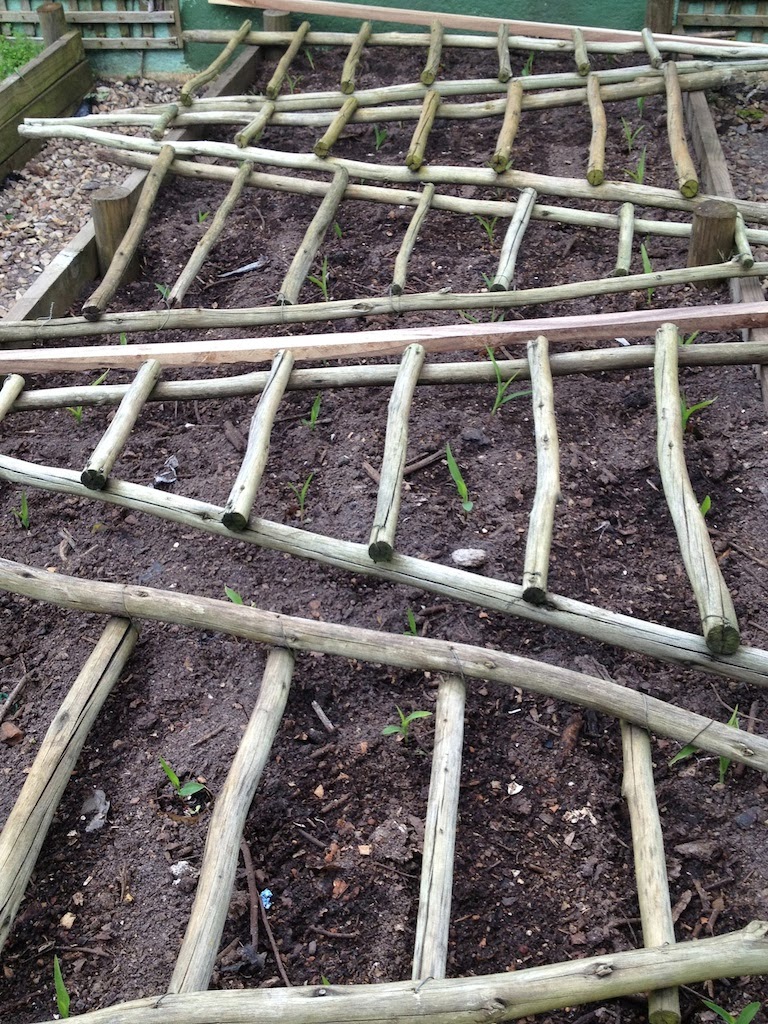
Our courgettes were too big for this treatment so I used small metal climbing frames that I had lying around which will stop the cats digging them up.

The corn we planted just had old trellises put over the beds which is sufficient protection for them. Every morning and evening I go snail collecting in the garden and feed them to the chickens so that is how we handle those critters [evil grin]!


Planting out tomatoes are an exception to the rule. Once you have a "true" leaf on each of your seedlings, which can take about 1 month, you need to repot them into a slightly larger pot slightly deeper than before. This causes the stem to be thicker and stronger and a bigger root system to develop. You should do this 3 or 4 times before their final planting out.

Potatoes are sown in the valleys of ridged ground and as the green shoots rise above ground level you "bank" up the potatoes which simply means cover the shoots  until just the top two leaves are showing. This causes tubers to form as the potatoes are banked up every few weeks.


So that's it...the biggest thing I appreciate on planting day is helping hands so I like to warn the family a couple of days ahead so that every one is in the right frame of mind. :)

In a couple of weeks time I will post some things that I have learnt about organic pest control and how to give ongoing care to your babies so that when they are big and grown they will give you some delightful harvests.

How are your spring gardens coming?

Sunday, August 25, 2013

Sunshine soap and seeds in the sun

While I know the weather could change tomorrow and remind me that we live in Cape Town (who changes her weather on a moments notice) these last few days have held the promise of spring. Mornings and evenings are chilly - enough to warrant a fire at night - but the days are warming and it is enough to make me feel the stirrings of garden activity in my fingers.

This week we got the majority of our seeds planted. The children made the newspaper pots, Superman fetched beer boxes from the store, my eldest filled the pots with soil and then it was my time. Sitting outside yesterday afternoon, determined to be ORGANISED this time I devised a little system.


I have a simple garden plan now that we only have the two areas which means that it is a limited number of seeds that I actually need, but I always plant about 10 more seeds than is needed according to the plan. This is because some seeds do not germinate or my over eager waterer waters the seeds away and by sowing extra I will have enough seedlings for the garden, any extras I give away.

On the garden planner I have it shows when to sow the seeds (but I do know this already), the number I need and expected harvest times. I quickly cross referenced this to the seed pack and made up markers with the details on them...


The marker shows the plant, the date of sowing, the first circle indicates the germination time and the second shows the days to harvest. I also recorded it on the planner.

Yesterday we sowed:

Cucumber - Bushcrop
Tomatoes - Roma, Beefsteak, Cherry
Courgettes (Zucchini) - Golden, Italian striped and Black Beauty
Peppers - Hungarian Hot Wax, Orange Sweet, Sante Fe and Red Cherry

Next week we will prepare more pots to sow about 100 corn seeds.


I placed the boxes on a bench on the sun and as I watch them soaking up the rays from the sun and the nutrition from the soil, I can't help but feel a bubble of expectation rise again.

I am also sadly behind in soap making. Before the renovation I made two big batches to see us through until about now...and considering that soap needs 5 weeks to cure, I should have done this at least 3 weeks ago. Our soap store should see us through for another 2 weeks but it was enough to make me put a move on.

I decided to try a new recipe which has yielded a very soft soap, this means that we will go through it too quickly and I will have to make more this week, I will choose a harder soap recipe. This is what I did:

340g coconut oil
340g rice bran oil
227g palm oil
149g caustic soda
404g spring water
1t turmeric
1 cup dried calendula petals - saved from last summer
5ml wheat germ oil

Add the water to the caustic soda outdoors and gently stir.

Add oils to pot and melt.

Check temperatures to match at 54 Deg C.

Add water solution to the oils and stir until trace. Add Turmeric and petals and wheat germ oil. continue to stir vigorously until firm trace is reached. Pour into moulds and cover overnight with towels. In the morning I popped them out of the moulds and place them into a sealed container to mature for 5 weeks.

I had hoped that the soap would retain this bright yellow, but it didn't and rather mellowed to the pale colour below. It is still pretty and I am sure we will enjoy the soap just as well.


 Do you also feel the change of season where you live?

Friday, November 23, 2012

A Kitty Garden

Our kitties are growing daily and are getting along better with Precious Baby Lamb. As they will soon be big enough to wander alone outside I decided to plant them a little patch to enjoy.

I pulled out the nasturtiums and calendula that were growing around the pond and had gone over, added some compost and planted two each of catnip and cat grass.

Hopefully by the time that the little ones are big ones these will be established for them to enjoy.

I also sowed some variegated sunflowers as the first seeds that I sowed never came up.

The pond is a real delight to me and my youngest as it is visited by so much wildlife each day. There are dragonflies, birds, frogs and other smaller critters there for him to study.

We do seem to have a leak though as within a day of being filled the water level sinks quite drastically.

I also heard today that we can use barley straw to control the algae growth in our pond so will be doing some research into where I can get this from.
The kitties went outside today for the first time and enjoyed the sunshine, the sand and the odd flying insect that buzzed around them.

I so enjoy having felines in the home again after all these years.....

Wednesday, November 7, 2012

Simply too much to do...

Homeschool convention season ended this weekend and with it, my last trip for the year for my business. It was a great weekend in Johannesburg and it is always a blessing to encourage other homeschool moms.

The double blessing is that each year when I go to JHB my business partner comes along. We get to see each other at this once a year event and share 3 days together catching up and sharing...so good.


But then it's home again and seeing soooo much to do in the blossoming spring garden, the end of year need to finish school books, choir concerts, tennis tounaments, olives to be put into vinegar, a home to be decluttered and on it goes.

Weeds...weeds...weeds...I have decided to call my garden a mature garden on account of the weeds. We picked up a sticky weed through some horse manure and this horrible plant grows everywhere. So on Sunday afternoon when I got in from the airport I decided that there is no time like now and got stuck in.

Garlic was dug up as the leaves had turned yellow...a very dissappointing harvest I must have done something wrong! But we managed a plait and the ones that broke off are being used already.

Onions are being harvested and used daily...some bulbs are developed others are used as spring onions. I need to empty the bed soon for the next marrow planting.

Broad beans are in, these were the late crop planted mid-winter which should go until December. Then they will be pulled and tomatoes will go in. I sowed seed of 4 different heritage tomatoes for this bed which should be ready in 6 - 8 weeks.

Weeding between corn and tomato plants took most of the time on Sunday and things look promising all around.


 We have four broccoli plants left from the winter planting. I think my plan worked to confuse the bugs as I scattered broccoli around the garden in different places and we had a very successful harvest this year with no cabbage moth.
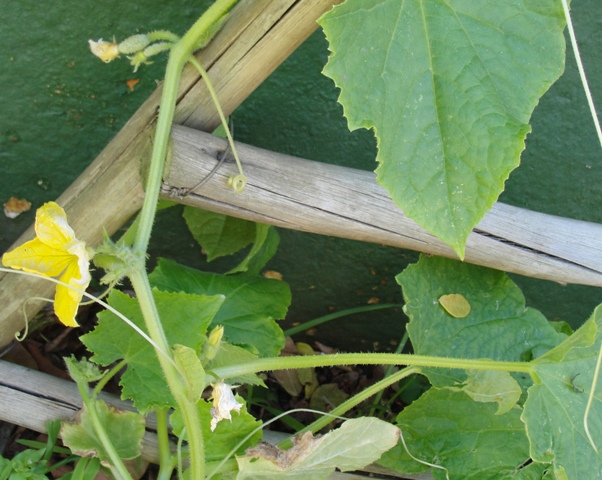
 Cucumbers are trailing their way up the trellises. I planted 4 different varieties but have forgotten which is which and I hope that I haven't messed up too much and that they will all be cross pollinated and a failure.


 Garlic chives doing well and yummy chopped into salads, quiches, frittata and other meals.
And our strawberries are coming in nicely. I see that we have bird visitors again as many have just one hole in them...I still use them like that - we just cut off the damaged part.

Last year I used old CD's to scare the birds away as they reflect in the sunlight and it worked well, so I had better rig that up again.

Even though there is soo much to do, I am glad that I can put away my bags and wrap up the year now...and there is nothing like being home!

Mmmh...East West Homes Best!

Saturday, August 11, 2012

Spring planning and preparation

Today feels like the furtherest from Spring than we will ever be with a wild Cape storm that started in the night. Freezing cold temperatures, hail, wind, rain - we have it all.

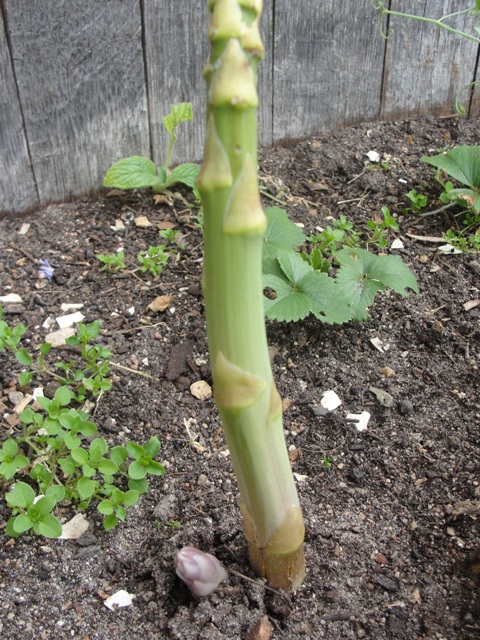
But I know that spring will come by surprise one day because my one asparagus plant is already sending up spears!

Yesterday I took out all my seeds that I have collected over the years and went through them to see what I can plant when over the next few months. While the kids each made their allocated stash of newspaper pots (up to about 100 now!) I got rid of ones that were expired and seperated the others into what can be planted in August, September and October.

Ones that have to go into the ground directly like beans I will wait for spring to truly be here before they go into beds. But all the others that enjoy being transplanted like tomatoes will go into the pots.


Seeds collected over the years and some new heirlooms bought in the UK recently

Organised...one job down, so many to go!
Then later in the day a surprise was waiting for me at the post office. I ordered some organic seed from the Pasadena Urban Homestead and they arrived just in time...I am so excited about these cucumbers.


I am also so grateful for our friend Des, who came to dig in all the compost and prepare the first planting areas. These two areas are in complete shade during winter so as the earth turns they will be ready for planting up as soon as the outdoor temps rise a little.

Dug over, composted and ready for plants

We grow corn and trailing squash here to maximise space.

So one step closer to being ready for spring. How are your plans coming?